

Between one destination and the next, many drivers are sitting on a rare opportunity: uninterrupted quiet time. Most of us are busy filling it with noise.
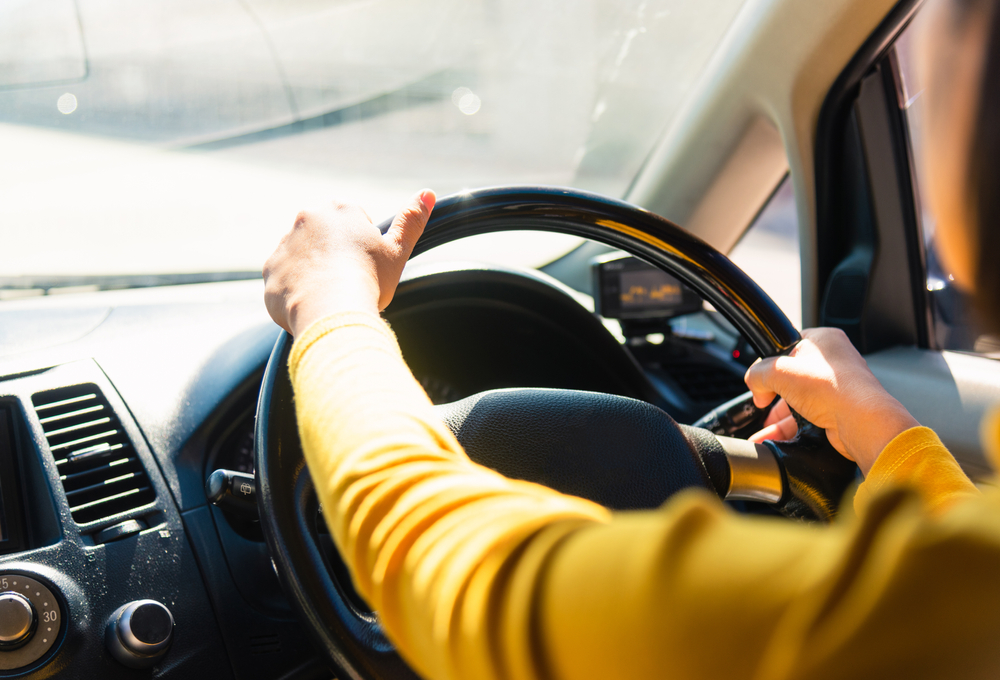
For many drivers, the moment the engine starts, the noise begins too: with a podcast playing, a call connected through Bluetooth, or music filling the cabin before the car has even left the carpark. We have become so used to constant stimulation that many of us instinctively reach for something to listen to, filling the silence before it even has a chance to arrive.
But what if the silence is the point?
For many people, especially in cities like Singapore, where life moves fast and personal space is tight, the car has become an unlikely refuge. Not from traffic, and not exactly from the world either. But from the relentless pressure of being constantly connected. A short drive, taken without a screen or a stream, can do something that a meditation app often cannot: it puts you in the present, by necessity. There is also a safety argument for keeping the noise down.
A loud cabin, whether from music, calls, or audio streaming, competes for your attention. Research shows that high noise levels inside a car slow reaction times and reduce the driver’s awareness of what is happening on the road. Silence is not just good for the mind. It may also make you a safer driver.
The Always-On Problem
We are more connected than we have ever been, and many of us are exhausted by it. Research by technology company Asurion found that the average person checks their phone over 150 times a day. Notifications arrive before we have finished processing the last one. Work messages land on weekends. Social media rewards people who never log off.
The result is a low-grade mental fatigue that many have come to accept as normal. We are always reachable, always responding, always performing some version of ourselves for some audience, however small. Rest, meaning time that is genuinely screen-free and unscheduled, has become harder to find.
Driving, when done without the usual audio accompaniment, offers a genuine break from this. On quieter routes and familiar commutes, driving often occupies just enough of the mind to create a rare middle ground between focus and reflection.
Why Driving Is Different From Other Downtime
Sitting quietly at home sounds easy in theory. In practice, the couch is three steps from the television, the kitchen is nearby, and your phone is always within reach. True stillness at home requires discipline that most people struggle to maintain, largely because the same devices that cause the fatigue are also the first things we reach for when we sit down.
Driving removes these temptations. Once you are on the road, the options narrow. You can listen to something, or you cannot. That is roughly it. And when you choose not to listen, the brain starts to do something it rarely gets to do anymore: wander. And unlike at home or in the office, you cannot scroll through your phone. In Singapore, using a handheld device while driving carries a fine of up to S$1,000 and up to six months’ jail for first-time offenders. The law does the deciding for you.
Neuroscientists refer to this as the brain’s “default mode network”, a mental state associated with reflection, memory processing, and internal thought. Research suggests that this network becomes more active when external stimulation drops and the mind is allowed to drift naturally. It is during these quieter mental moments that people process emotions, consolidate memories, and often arrive at creative insights that might otherwise be drowned out by constant stimulation. Because modern devices continuously compete for our attention, this reflective state is interrupted far more often than it once was. A drive without distractions can give the brain rare room to wander, allowing problems that once felt stuck to become clearer and ideas buried beneath the noise of the day to gradually surface.
What The Research Says
The idea that unstructured mental time is good for us is well supported. A 2012 study published in Psychological Science found that mind-wandering during simple tasks improved performance on creative problem-solving tests afterwards. The researchers concluded that giving the brain room to drift, rather than keeping it constantly occupied, benefited higher-order thinking.
Separate research from the University of California, San Francisco, found that the brain needs genuine downtime to process and store new information. Without it, learning and memory consolidation suffer.
None of this means you should drive in a daze. But it does suggest that the habit of filling every quiet moment with audio input may be costing us more than we realise. The silence we avoid might be exactly what we need.
The Singapore Context
In Singapore, this conversation takes on a particular shape. The country has one of the highest smartphone penetration rates in the world. A 2023 report by We Are Social found that Singaporeans spend nearly eight hours a day on the internet, one of the highest figures globally.
At the same time, personal space is genuinely limited. Flats are compact, commutes are crowded, and offices are increasingly open-plan, while even cafés and public spaces rarely stay quiet for long. Finding an uninterrupted corner to think, reflect, or simply be alone with your thoughts is becoming increasingly difficult.
The car, for those who own one, becomes something more than transport. It is one of the few places where you are physically alone and not expected to respond to anyone. The ERP gantry does not want your opinion. The traffic light does not need a reply.
This is not unique to Singapore. Commuters in Jakarta, London, Seoul, and Sydney describe their cars in similar terms: a transitional space, neither home nor office, where they feel briefly free of both. But in land-scarce, high-density cities, the feeling carries extra weight.
How to Actually Do This
The idea is simple. Putting it into practice requires a small act of will.
Start with one drive a week where you leave the music off. Make a mental note, before you pull away, not to reach for your phone at any point during the journey, including when you are stopped at traffic lights or waiting in a jam. Do not set an intention. do not try to solve a specific problem – just drive and let the mind do what it does when left alone.
It may feel uncomfortable at first. That initial restlessness is often just the brain adjusting to the absence of constant stimulation. But given a few quiet minutes, the discomfort usually begins to ease, replaced by a calmer, more reflective state. Thoughts that have been pushed aside by the noise of daily life often start to surface once the mind finally has room to wander.
If a completely silent drive feels like too much, decide before you set off that you will skip the audio for that journey. No podcast, no music, no calls. Make the decision before the engine starts, so there is nothing to switch off mid-drive.
The goal is not to romanticise driving or turn it into a wellness ritual. It is simply to reclaim a small window of time that most of us are currently handing over to our devices without a second thought.

Digital detoxes tend to call up images of weekend retreats and phone-free cabins in the woods. But the conditions most of us actually have access to are far more ordinary. A car. A road. Twenty minutes between one place and another.
The next time you get in the car, try leaving the speakers off. Not as a challenge or a wellness exercise, but simply to see what happens when the noise drops away.
The quiet is already there. We just keep drowning it out.