

Getting in the car with nowhere particular to go was once a weekly ritual for millions of families. Today, rising costs, gridlocked roads, and digital entertainment have taken most of the joy out of driving for pleasure. But the Sunday drive is not entirely gone yet.
 There was a time when the car was not just a way to get somewhere – it was the destination. Across the United States, Europe, and parts of Asia, the Sunday drive was a genuine cultural ritual. Families would pile into the car after lunch, head out along a country road or coastal route, and return home hours later having done little more than look out of the window and talk. No GPS, no itinerary, and no real reason to be anywhere.
The habit grew alongside car ownership in the mid-twentieth century. Owning a car was still relatively new for many households, and driving was a form of freedom. Roads then were less congested, fuel was cheap, and the act of motoring carried a quiet pleasure all its own. For many, it was the highlight of the week.
How The Economics Changed
The leisure drive began its slow decline in the 1970s. The oil crisis of 1973 was a major geopolitical conflict that prompted oil-producing nations to impose an export embargo against nations backing their opponents. The sudden squeeze on global supplies sent fuel prices soaring, and turned energy into an expensive commodity. Filling the tank for a purposeless afternoon outing started to feel irresponsible. Driving habits shifted and, for many families, they never fully shifted back.
Although pump prices eventually eased, they never returned to pre-crisis levels in real terms. The crisis also came at a time of broader economic hardship, including high inflation and unemployment, which made discretionary spending harder to justify. For many households, the habit of driving only when necessary simply stuck.
Today, the financial cost of running a car is far higher than it was for previous generations. Fuel, insurance, road taxes, and maintenance make car ownership one of the largest household expenses in most countries. Against that backdrop, burning fuel for the sake of it feels difficult to justify.
In Singapore, the situation is especially stark. The Certificate of Entitlement (COE) system, introduced in 1990 to control vehicle numbers on the island’s limited road network, has made car ownership among the most expensive in the world. COE premiums for a standard car have exceeded S$100,000 in recent years. Add purchase price, insurance, and road tax, and the total cost of owning a car in Singapore can run to several hundred thousand dollars over a decade. People do not buy cars in Singapore casually. When they do, they tend to use them deliberately.
Too Much Traffic To Enjoy The Ride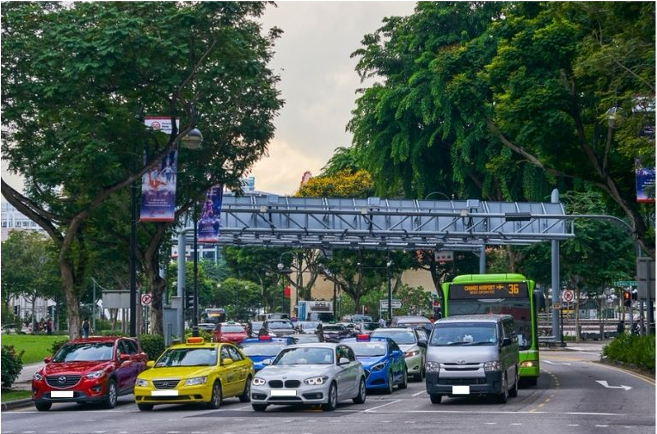
Beyond cost, the physical experience of driving has changed, too. Roads that were once open and relatively empty are now congested for much of the day. Urban sprawl means that escaping the city takes longer than it used to, and the journey out is often spent crawling through traffic rather than enjoying the drive.
Singapore, with a land area of roughly 730 square kilometres, has very little road to spare. The island has around 3,500 kilometres of roads shared by over a million registered vehicles. The Electronic Road Pricing (ERP) system charges drivers for using busy expressways and city roads during peak hours. Even on a Sunday, popular routes in and around the city can back up. The idea of a free, spontaneous drive with no destination feels increasingly at odds with the reality of the road. There is also the simple fact of scale. Singapore is one of the smallest countries in the world. There is no open countryside to head towards, no long stretch of empty highway to lose yourself on. Most leisure drives end somewhere crowded, which rather defeats the purpose.
This is not unique to Singapore. In London, a daily charge applies to drivers entering the Congestion Charge Zone. Drivers must pay by midnight on the day of travel, or by the end of the third day to avoid a penalty. This system has reshaped how people think about urban driving. In Tokyo, tolls on expressways are among the highest in the world. Leisure driving in major cities now comes with a bill attached.
The Environment Enters The Conversation
For younger generations, especially, the environmental cost of driving weighs differently than it did for their parents. Climate awareness has grown significantly over the past two decades, and the idea of driving purely for recreation sits uncomfortably alongside concerns about emissions and fuel consumption.
This does not mean young people do not drive, but the attitude towards the car has changed. Surveys in the United Kingdom, Germany, and the United States, have found that people under thirty are less likely to hold a driving licence than their parents were at the same age, and less likely to see car ownership as a priority. In Singapore, where public transport is efficient, affordable, and covers most of the island, many younger residents choose not to own a car at all.
The rise of electric vehicles (EVs) has complicated this picture somewhat. EV drivers often report a renewed enjoyment of driving, partly because the vehicles are quiet and smooth, and partly because the environmental guilt associated with petrol cars is reduced. But EVs remain expensive in Singapore, and the charging infrastructure, while growing, is still limited compared to petrol stations.
Screens Won The Back Seat
There is another reason the Sunday drive has faded, and it has nothing to do with roads or fuel. Screens have replaced the window.
Where children once sat in the back seat and watched the world go past, they now watch YouTube, play games, or scroll through social media. The sensory experience of a drive, the changing scenery, the half-heard conversations between parents, and the gradual shift from city to countryside, has been replaced by a private digital world in each pair of hands. Adults are not immune either. The idea of disconnecting from the phone for two hours on an unplanned drive feels increasingly unusual.
This is not a crisis, but it does represent a real shift in how leisure time is experienced and what people consider restful or enjoyable. The passive pleasure of watching the road go by has been edged out by more active, more stimulating alternatives.
The Drive Is Not Dead Yet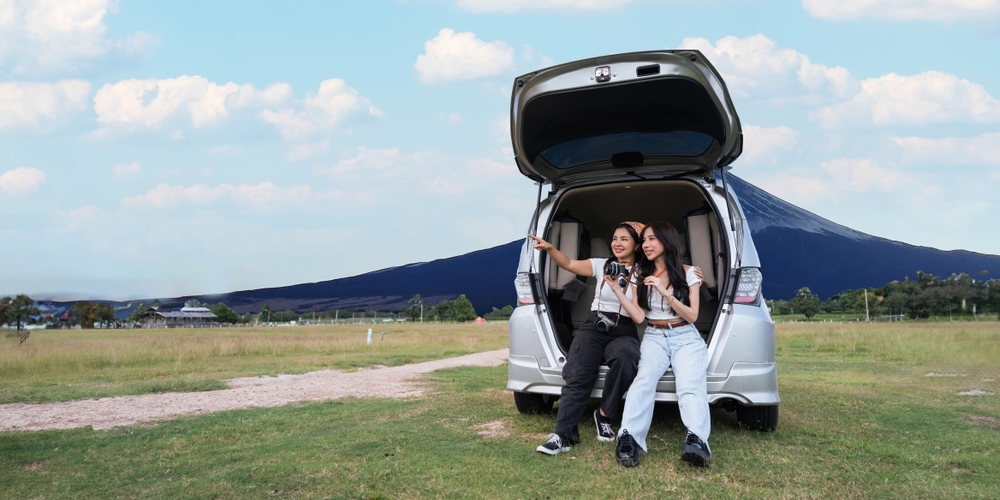
Despite everything, leisure driving has not disappeared. It has changed shape.
Road trips remain popular, particularly among those who plan them carefully and treat the drive itself as an experience rather than a chore. Just across the Causeway from Singapore, weekend drives to Cameron Highlands, Penang, or the east coast remain a draw for Singaporean drivers despite the ERP and toll fees, and the Woodlands or Tuas checkpoint queues. For those who want more open road, countries like Australia, New Zealand, and Japan have become popular destinations for road trip holidays, offering the kind of space and scenery that simply is not available at home.
Driving enthusiast communities are active across Southeast Asia and beyond. Winding mountain roads, coastal routes, and curated scenic drives attract people who have not lost the pleasure of being behind the wheel. There is also a growing interest in the kind of slow travel that a road trip provides, moving at a human pace, stopping when something looks interesting, and letting the journey be part of the experience.
For AA Members, the Autoventure programme organises group drives, offering a social way to enjoy the road without having to plan everything alone. You can find their schedule here.
What has changed is that leisure driving is now a more deliberate choice. It is planned, considered, and usually attached to a destination or event. The truly purposeless Sunday drive, the one with no map, no plan, and no destination, may belong more to memory than to modern life.
A Ritual Worth Reconsidering
The Sunday drive was never really about the car. It was about unhurried time, shared with people you care about, with nowhere else to be. That kind of time is rare now, and perhaps that is the real loss.
Whether behind the wheel or not, the underlying need that the Sunday drive met has not gone away. People still want to slow down, disconnect, and move through the world without urgency. The question is whether the car is still the best way to do it, or whether that feeling now has to be found somewhere else entirely.