

Why workers are building cafés and co-working spaces into their daily journeys, and what it means for cities like Singapore.

For decades, the commute was something to survive. You packed into a train, stared at your phone, and counted the stops. But a growing number of workers have started doing something different. They leave home earlier than they need to, stop at a café or co-working space along the way, and only then head to the office, or skip the office altogether for the morning. This is what urban planners are beginning to call the “third space” commute, and it is changing how people think about work, transit, and the city itself.
The Idea Behind The Third Space
The phrase draws on a concept developed by American sociologist Ray Oldenburg in his 1989 book “The Great Good Place”. Oldenburg described “third places” as locations outside home and work: cafés, libraries, and parks, where people gathered without a fixed agenda. They were, in his view, the social glue of communities.
What has shifted is that these spaces are now being used for focused, productive work. A café near a train station is no longer just a place to grab a flat white before the commute. For many workers, it has become the first hour of the working day, deliberately built into the schedule. The third place has quietly become a third workspace.
A 2023 study by global workspace operator IWG found strong demand for flexible workspaces closer to where people live, rather than only in city centres. Its research has also pointed to rising use of workspaces near transport hubs. That shift in location matters. It suggests workers are not just changing how they commute. They are thinking where they choose to live and work, weighing how close a good workspace is as heavily as how close the office is.
Why Singapore Is Well-Placed For This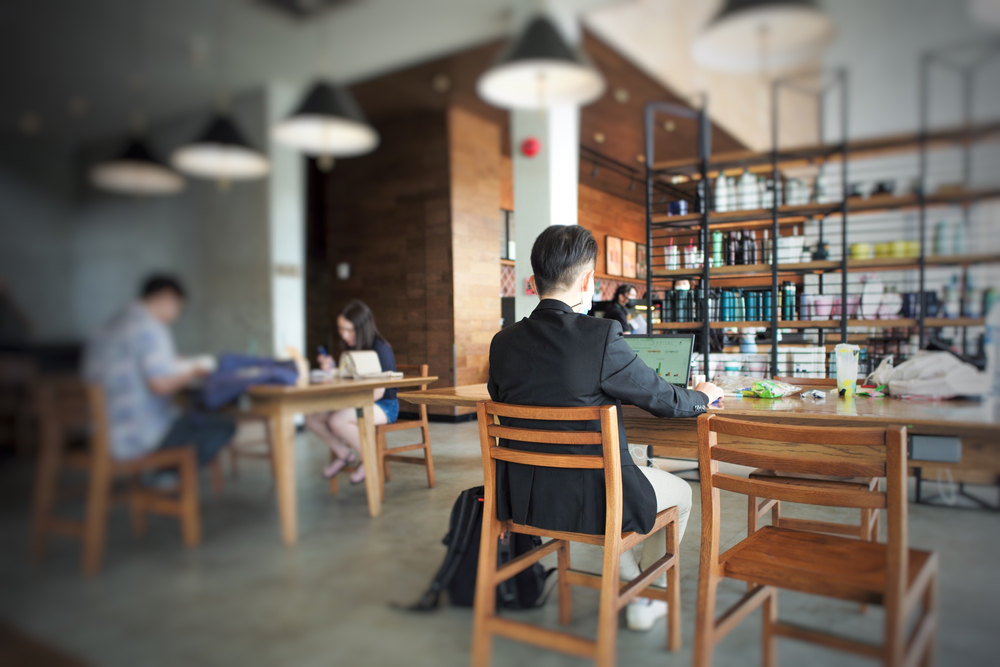
Singapore may be one of the cities best suited to this kind of commute. The MRT network is extensive and generally reliable, and café culture has grown considerably over the past decade. Neighbourhoods like Tiong Bahru, Joo Chiat, and Jalan Besar are now dense with independent cafés, many of which fill up with laptop workers well before 9am. The infrastructure for third-space working is already there; it just was not always framed that way.
Co-working operators have taken note. JustCo and The Great Room both operate spaces near major MRT interchanges, while newer entrants are positioning themselves specifically as neighbourhood co-working options. The pitch is straightforward: why travel to a CBD office every day when you can work from a well-equipped space ten minutes from home?
Singapore’s Urban Redevelopment Authority has also been exploring decentralised work hubs as part of its longer-term planning. The goal is to reduce the concentration of jobs in the city centre and give residents more options for working closer to home. Third space commuting fits neatly into that thinking, even if the connection has not always been made explicit.
The Productivity Case
One reason this trend has gained traction is that many workers find the transition between home and office genuinely useful for settling into work. A noisy flat, a restless child in the next room, limited desk space — these are real obstacles to focused morning work. A café provides a clean break from the domestic environment without the pressure of an open-plan office.
Research from the University of Illinois found that moderate ambient noise, the kind you get in a busy café, can improve creative thinking compared to both complete silence and loud environments. The finding has been widely discussed, and there are now apps like Coffitivity that simulate café background noise for people working from home. The café effect, it turns out, is real.
But for many workers, the appeal is simpler than neuroscience. The commute itself has always served as a mental buffer between home life and work. A stop midway extends that buffer, giving people time to organise their thoughts before facing colleagues or back-to-back meetings. It is not a productivity hack. It is just a bit of breathing room.
The Economics Of The Stop
Third-space commuting also has economic implications worth noting. Cafés and co-working spaces near transport nodes are seeing stronger morning footfall. In cities like London, Tokyo, and Sydney, some café owners have introduced monthly work passes: a fixed fee for a reserved seat, reliable power points, and unlimited coffee, aimed at regular commuters who want a consistent morning stop. Singapore has not seen this model take hold among independent cafés. The city’s co-working operators have effectively filled that gap instead, through the flexible day passes covered below.
Co-working operators such as WeWork, JustCo, and IWG’s Regus and Spaces brands have also adjusted their pricing. Rather than monthly memberships aimed at full-time remote workers, many now offer day passes, morning-only rates, and drop-in options designed for people who only need a few hours. The flexibility suits the hybrid worker, who might come in twice a week rather than every day.
In Singapore, a day pass at a mid-range co-working space typically costs between S$25 and S$50. For someone using it two mornings a week, that is manageable, particularly if it means fewer days travelling into the CBD and a better start to the working day.
What Cities Are Starting To Learn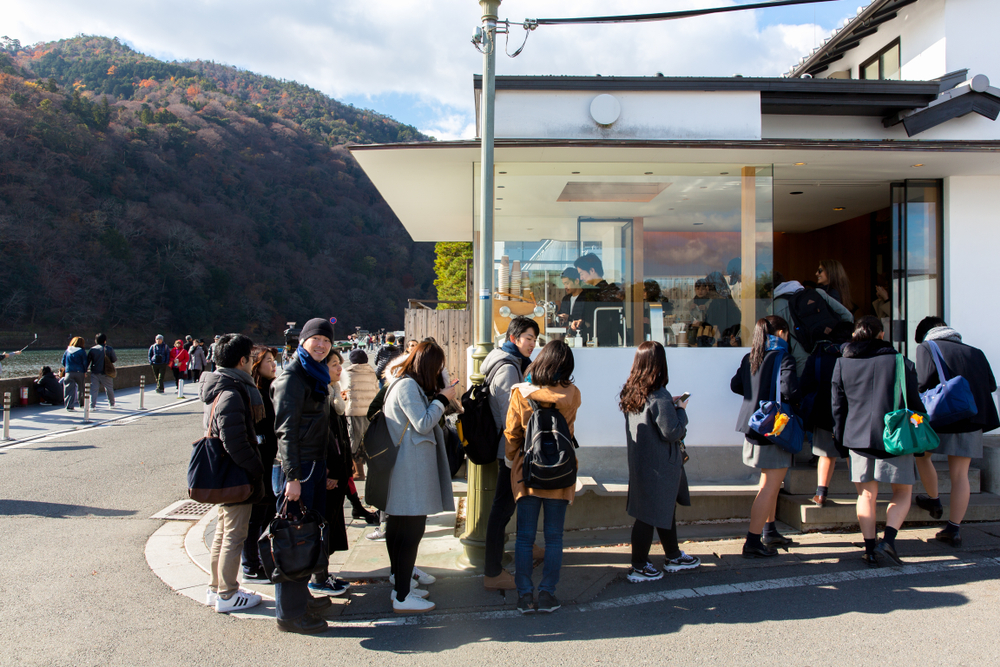
Urban planners have traditionally assumed that workers flow in one direction: from residential areas into commercial centres in the morning, and back again at night. Third-space commuting disrupts that assumption, and cities are beginning to notice.
When workers stop at a café or co-working hub near home before heading into town, or instead of heading in at all, it changes how transit networks are used, when peak hours occur, and how neighbourhood high streets function during the day. These are not trivial changes. They affect everything from train scheduling to retail planning to the long-term use of commercial real estate.
Some cities have already responded. The Tokyo metropolitan government has supported satellite-office initiatives and suburban work hubs, partly to reduce crush-loading on rail lines during peak hours. Near London’s Elizabeth line, co-working spaces have opened around several new stations, with operators citing improved accessibility as a key factor. Singapore’s approach has been more gradual, but the direction is similar: mixed-use development, work-near-home options, and a gradual loosening of the assumption that productive work only happens in the CBD.
The Limits
Not everyone can do this. Workers in healthcare, retail, construction, and manufacturing cannot pause at a café on the way to a shift, and the same goes for anyone else whose job does not give them that kind of flexibility. The third space commute is largely a white-collar phenomenon, shaped by the conditions of hybrid work and a certain level of disposable income.
The cost also adds up. A S$5 coffee every morning and a co-working pass twice a week is not nothing. For younger workers or those on tighter budgets, the appeal may be limited. And there is a broader question about what the trend means for the office itself. If workers are spending part of their day in a café or a neighbourhood hub, the office has to offer something those places cannot. Many employers are still working out what that is.
The third space commute is not a revolution. It is a practical adjustment, made by people trying to find a way of working that fits their lives better than the old model. But quietly, it is reshaping how cities look and function — which neighbourhoods hum with activity in the morning, which transit lines fill up and when, and what workers actually expect from the places they choose to spend their time.
For Singapore, with its compact size, reliable transit, and growing café culture, the conditions are already in place. The question is whether planners, operators, and employers choose to lean into that shift, or keep designing cities and workplaces for a commute that fewer people are actually making.