

Nearly 1.2 million people die on roads every year. Most crashes trace back to human error. Self-driving vehicles are being tested as a fix, and Singapore is quietly becoming one of the world’s leading proving grounds.
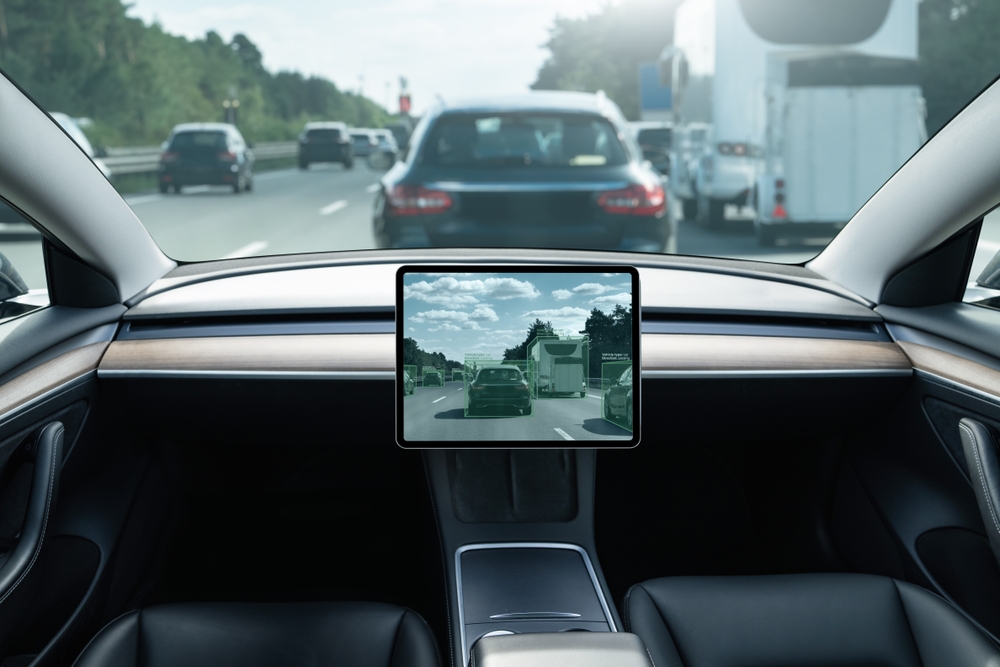
Every year, roads kill roughly 1.19 million people worldwide, according to the World Health Organisation (WHO). That is more than 3,000 deaths a day. Road crashes are the leading cause of death for children and young adults aged 5 to 29, ahead of disease, conflict and most other causes. Between 20 and 50 million more people suffer non-fatal injuries annually, many of them permanently disabling. The economic cost to nations amounts to around 3 per cent of global GDP.
Singapore is not spared from this toll. According to the Traffic Police’s Annual Road Traffic Situation 2025, the country recorded 149 road fatalities last year, up from 142 in 2024, and the number of injury accidents rose to 7,560 cases. The most common cause, accounting for more than half of all accidents, was failure to keep a proper lookout: drivers who did not check for pedestrians, motorcyclists who filtered without looking, pedestrians distracted by their phones. These are precisely the behaviours an autonomous system is designed to eliminate.
The dominant factor in most crashes, in Singapore and globally, is human behaviour: distraction, fatigue, misjudgement, speeding and drink driving. Transport planners have long known this. The question is whether removing the human from the control loop can meaningfully reduce the harm.
Self-driving vehicles, also called Autonomous Vehicles (Avs), are increasingly being put forward as one answer. The premise is simple: a machine does not get tired, does not check its phone mid-journey, and does not misjudge a gap after a night out. Real-world trial data is beginning to back that up.
What The Safety Data Shows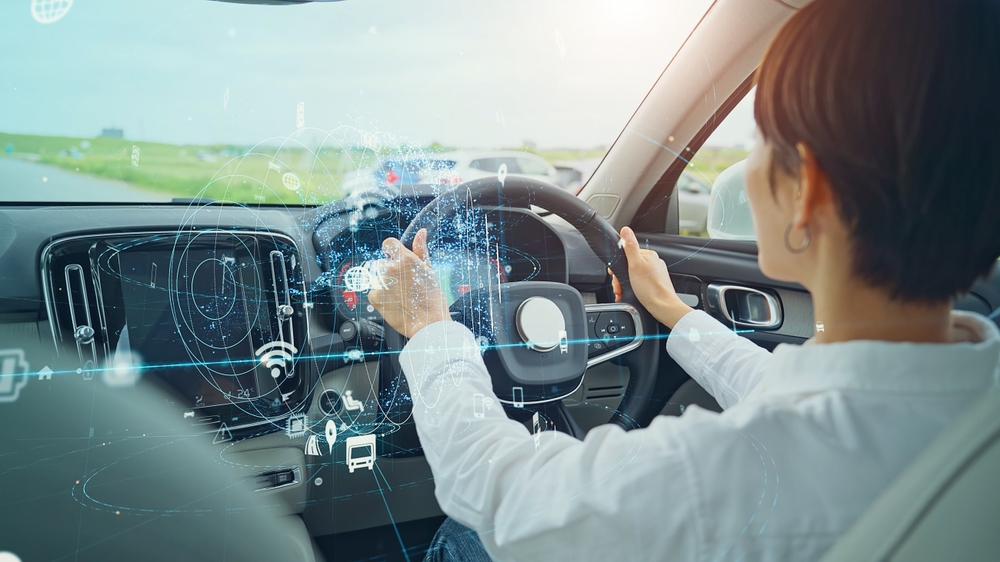
The clearest safety data comes from the United States, where Waymo, Google’s autonomous driving subsidiary, has accumulated more than 127 million fully driverless miles across cities including San Francisco, Phoenix and Los Angeles. When its crash rates are compared to human drivers covering the same roads, the gap is hard to ignore. Compared to human benchmarks, Waymo recorded 90 per cent fewer serious injury crashes, 81 per cent fewer injury-causing crashes, and 92 per cent fewer crashes involving injured pedestrians.
Swiss Re, one of the world’s largest reinsurers, analysed Waymo’s claims data over 25 million miles and found 92 per cent fewer bodily injury claims and 88 per cent fewer property damage claims than human-driven vehicles on the same routes.
Singapore’s AV trials are still at an early stage, and the LTA has not yet published equivalent per-mile safety performance figures. But the domestic road data is instructive: the TP’s 2025 report found that more than half of all local accidents were caused by failure to keep a proper lookout, one of the first behaviours an autonomous system is engineered to remove from the equation.
One important caveat: AV companies are required to report every incident, including minor ones, while human drivers rarely bother with low-severity collisions. This means AV crash data is likely more complete than human data, which in turn suggests the safety advantage may be larger than the headline numbers show. In Singapore, the LTA requires all AV trial operators to submit black-box data daily. That discipline means the country is accumulating a detailed picture of how autonomous vehicles behave on its roads, data that should eventually make a local safety comparison possible.
That said, autonomous driving is not without problems. Total crash counts in the US rose between 2024 and 2025 as AV mileage expanded, though more miles driven will always produce more absolute incidents even if the rate per mile improves.
A more pointed criticism concerns edge cases: construction zones, heavy rain, and atypical pedestrian behaviour can push a vehicle beyond the boundaries of its operational design, causing it to slow down, stop, or issue a takeover request. When that happens, the safety operator on board must take over manual control quickly.
Research has found this handover carries its own risk. A driver who has been passively monitoring an automated system for an extended period may need several seconds to re-engage and assess the situation, and in a fast-developing scenario, those seconds matter. If the handover is poorly managed, it can introduce rather than remove danger.
This is why Singapore’s LTA requires safety operators to remain attentive at all times, not merely present in the vehicle.
Singapore As A Testing Ground
Singapore offers something other major markets do not: a small, dense, well-governed environment where trials can be carefully managed and expanded in a measured way. On-road AV trials in Singapore began as far back as 2015. Since then, the pace has picked up considerably.
The city-state has embraced autonomous vehicles partly out of necessity. It faces a chronic shortage of bus drivers, scarce land, and growing pressure on its public transport network. For Singapore, AVs are not just a technology experiment. They are increasingly viewed as a response to real operational constraints, from manpower shortages to land limitations.
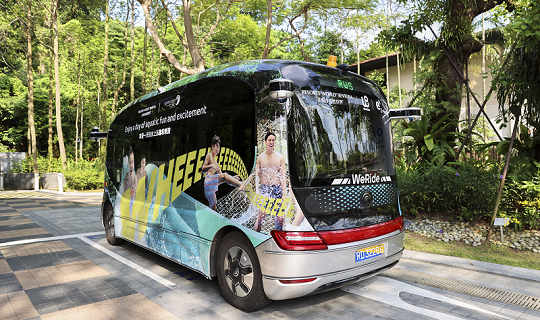
In July 2025, Chinese AV firm WeRide launched what was described as Southeast Asia’s first fully driverless Robobus service at Resorts World Sentosa, operating without any safety officer on board. The milestone followed a full year of supervised trials during which the vehicle carried tens of thousands of passengers. Singapore’s Land Transport Authority (LTA) granted approval only after extensive safety assessments had been completed.
In Punggol, a residential district in northeast Singapore, WeRide and Grab received LTA approval in late 2025 to run the Ai.R (Autonomously Intelligent Ride) programme. The two companies are the only ones currently authorised to conduct public trial rides in the district, running WeRide’s GXR, a five-seat autonomous shuttle, on designated feeder routes. Full public operations were expected to begin in 2026.
Punggol was selected partly because of gaps in existing feeder transport coverage and its suitability as a controlled urban testbed. If successful, other districts such as Tengah in the west could follow.
ComfortDelGro, Singapore’s largest public bus operator, is also planning a separate AV route in Punggol in partnership with Pony.ai. Homegrown firm Moovita operates a 13-seater bus between a polytechnic and its nearest MRT station, with plans to add more stops and vehicles. The district is fast becoming the country’s primary AV proving ground, with multiple operators running simultaneously.
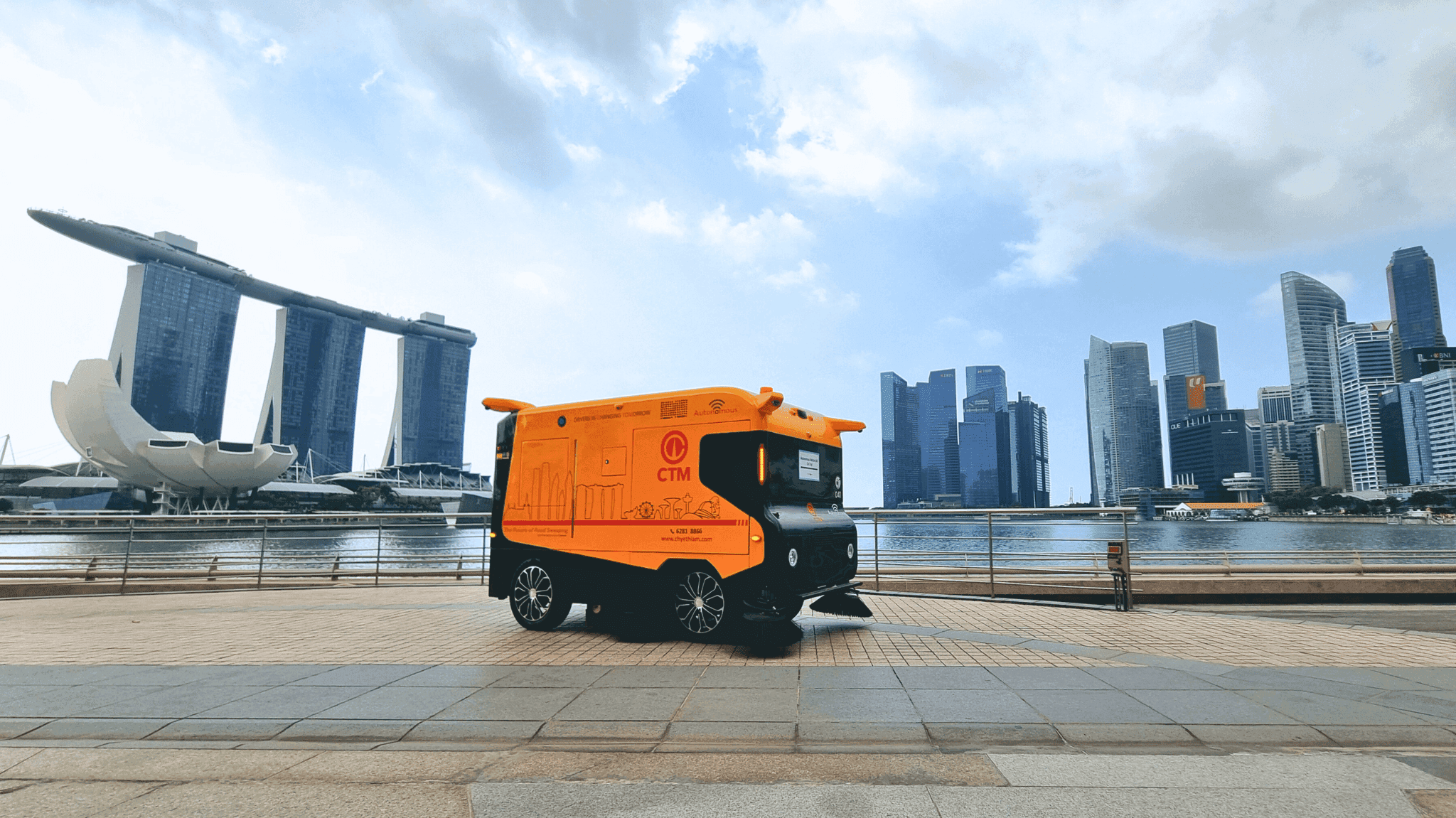
Beyond passenger transport, Singapore has rolled out AVs for logistics and street cleaning. FairPrice, the country’s largest supermarket chain, began using autonomous trucks for goods transfers in 2024. WeRide’s autonomous sweepers were deployed at Marina Coastal Drive and the Esplanade by late 2024, followed by Jurong Lake Gardens in 2025. Changi Airport has been running a two-year trial of autonomous buses to ferry ground staff since mid-2024.
The government’s target is to have between 100 and 150 self-driving vehicles on Singapore roads by the end of 2026, with plans to expand the fleet across the island over the following five years.
Public reception has been broadly positive in Singapore, though not without reservations. When the Sentosa Robobus began carrying passengers in 2024, many riders described the experience as smooth and comfortable. But the questions people ask are reasonable ones. What happens if something goes wrong mid-journey? How does the vehicle handle a sudden downpour? And who is responsible if there is an accident?
On the first point, every AV currently operating in Singapore’s Punggol trial carries a trained safety operator on board. These are experienced Grab driver-partners certified through GrabAcademy and WeRide to intervene if the vehicle encounters a situation it cannot handle. For the fully driverless Sentosa Robobus, a remote operations team monitors the vehicle at all times. If it reaches the edge of what it can manage safely, it is designed to slow down and stop while the team is notified.
On rain, the answer is more nuanced. WeRide’s vehicles use a combination of LiDAR and cameras that provide 360-degree sensing up to 200 metres, and have been trained specifically on Singapore’s conditions, including sudden heavy downpours. They can detect objects in the rain. But research shows that very heavy rainfall does degrade sensor performance, reducing radar detection range significantly. The engineers are working on this. The honest position is that these vehicles handle wet conditions better than many people assume, and better than a distracted human driver. But Singapore’s worst squalls remain a genuine engineering challenge, and it is one reason a safety operator stays on board during the trial phase.
On liability, Singapore does not yet have a specific legal framework for AV accidents. Under current law, fault may rest with the manufacturer, the vehicle owner, or the safety operator, depending on circumstances. But any operator running AV trials here must carry third-party liability insurance as a condition set by the LTA, ensuring passengers and third parties can be compensated regardless of where fault ultimately lies. Allianz Insurance recently underwrote WeRide’s Sentosa service, which is a practical sign that the insurance market is beginning to price this risk. A formal liability framework is in the works, with the Ministry of Transport and LTA consulting legal experts and insurers on how the rules need to evolve.
A 2025 S&P Global survey of nearly 8,000 respondents across eight countries found that roughly two-thirds expressed interest in using autonomous vehicle features, but full trust remains a work in progress. Most people are willing to try the technology. Fewer are yet ready to take it entirely on faith.
The Regulatory Frame
Singapore’s regulatory approach is cautious by design, and that is not a criticism. Any operator wanting to run AV trials must apply to the LTA for authorisation. Requirements typically include a safety driver in the vehicle at all times, a restricted operating zone, a data recorder with daily submissions to the LTA, and liability insurance coverage. Only after sustained safe performance does the LTA consider removing the safety driver requirement, as it did for WeRide’s Sentosa service.
Under the Road Traffic (Autonomous Motor Vehicles) Rules 2017, the LTA has both the authority and the tools to manage how AVs are introduced to public roads. This layered, phased approval model is central to Singapore’s standing as a credible testing environment. It is also part of why international AV companies have chosen the city-state as a regional base.
The liability framework is also evolving. Singapore’s Ministry of Transport and the LTA have acknowledged that existing laws, written for human drivers, will need to adapt as vehicles become truly autonomous. Consultations with insurers and legal experts are ongoing, and a steering committee drawing from industry, academia and government has been formed to coordinate deployment.
Adapting the Fleet
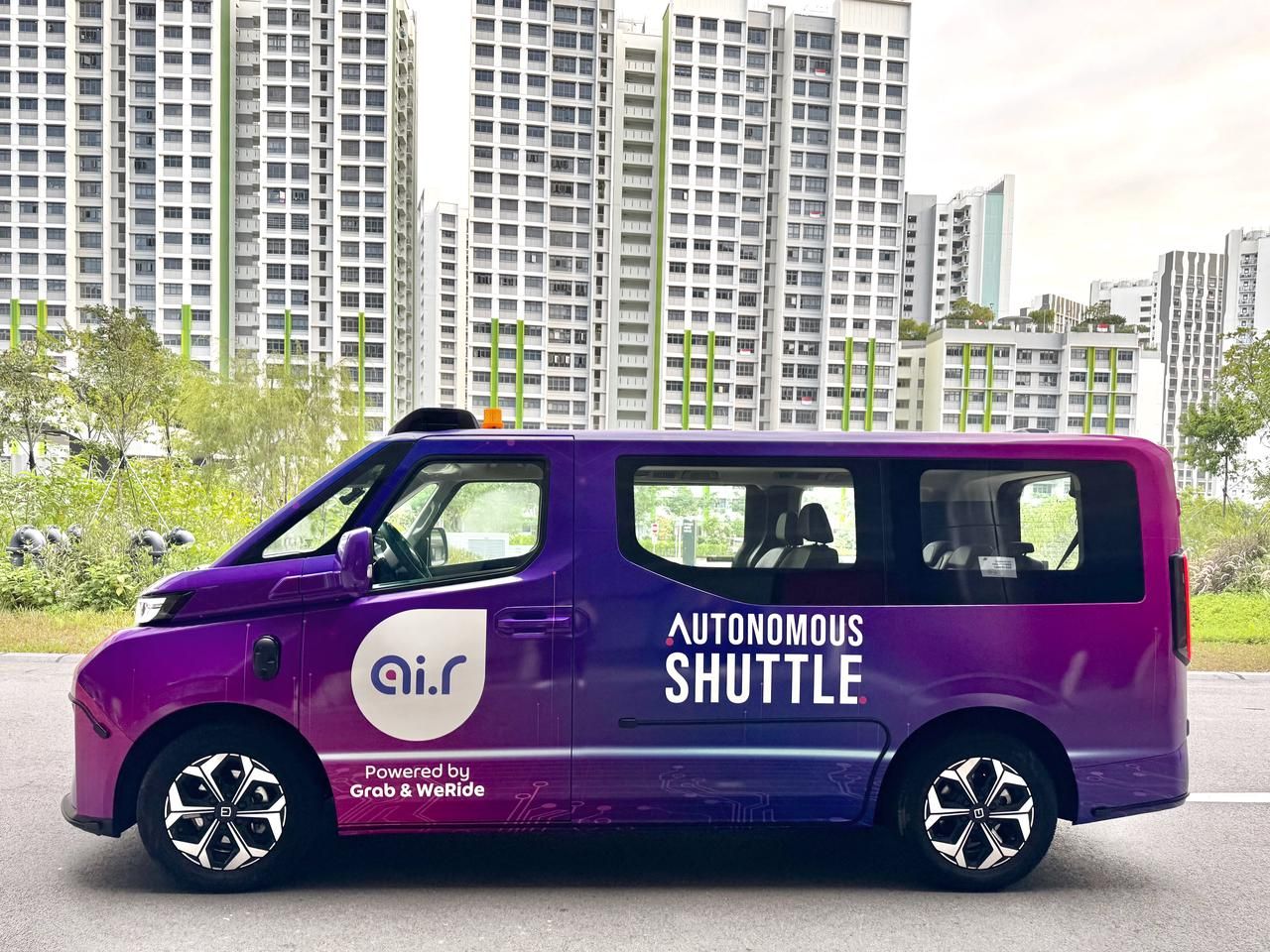
Moving from controlled trials to a functioning public fleet requires far more than the vehicles themselves. It requires drivers retrained as safety operators, as Grab and WeRide have done through GrabAcademy. It requires infrastructure changes: smart traffic signals, geofencing technology and roadside communication units built into urban planning from the start, not retrofitted later. Singapore’s advantage is that AV trials are being integrated with logistics and transport infrastructure, not treated as separate experiments.
Public acceptance will also shape how quickly the fleet grows. Among countries actively deploying AV technology, Singapore stands out for how receptive its population has been. Singapore ranked first globally in KPMG’s Autonomous Vehicles Readiness Index, a measure that takes into account not just regulation and infrastructure but consumer acceptance.
When Resorts World Sentosa launched Southeast Asia’s first public autonomous shuttle service in late 2024, it drew many families, with both adults and children describing the rides as comfortable and safe. This receptiveness is partly a function of the country’s high digital literacy and its population’s general trust in the government’s ability to manage new technology responsibly.
Globally, trust in autonomous vehicles is rising, though cautiously. The 2025 S&P Global Autonomous Driving Consumer Survey found that roughly two-thirds of respondents across eight countries expressed interest in AV features, but most still prefer partial automation over full autonomy. Younger adults are the most comfortable with the technology, and prior experience of riding in an AV consistently increases willingness to use one again.
A Long Road, With Reason for Optimism
Singapore will not solve the world’s road safety problem on its own. But as a proof of concept in a controlled, well-regulated setting, what is happening here matters. The trials are generating real-world data about how AVs behave in dense, tropical, urban environments, information that cannot be replicated in a simulator.
Research published in Nature Communications estimated that if AVs were introduced with a safety record just 10 per cent better than the average human driver, approximately 600,000 fatalities could be prevented in the United States alone over 35 years. That is a conservative assumption given what Waymo’s data already shows.
The goal is not to make roads perfect overnight. It is to make them progressively less dangerous. On that measure, the early evidence from autonomous vehicles is difficult to argue with. The technology is not ready everywhere yet, but in places like Singapore, the foundation is being laid. And for the millions affected by road crashes every year, the case for getting it right could not be more urgent.