

Peak hours in Singapore turn roads into battlegrounds of stress and close calls. Simple habits help drivers stay sharp and cool amid the chaos.

The alarm goes off at 6:45AM, and you are already calculating. Do you leave now or risk the jam? Take the PIE or cut through the back roads? By 7:30PM, those decisions are made for you: the expressways have chosen their own pace, and it is not yours. This is peak hour driving in Singapore, and for thousands of commuters every weekday, it is where patience, skill, and a fair amount of cortisol all collide.
Singapore has over one million registered motor vehicles on its roads, according to Land Transport Authority statistics, a figure that has held steady even as COE premiums have climbed. On a 728-square-kilometre island, that density means the margin for error is already limited, and during rush hours, it narrows further.
The Singapore Police Force’s Annual Road Traffic Situation report for 2025 flagged a 27.1% increase in red-light running accidents compared to the previous year, from 96 cases to 122. It also noted that inattention from drivers, motorcyclists, and pedestrians alike, remains the single most persistent cause of serious collisions. Being a good driver in this environment is not just about technique. It is about managing yourself.
Why Traffic Jams Scramble Your Brain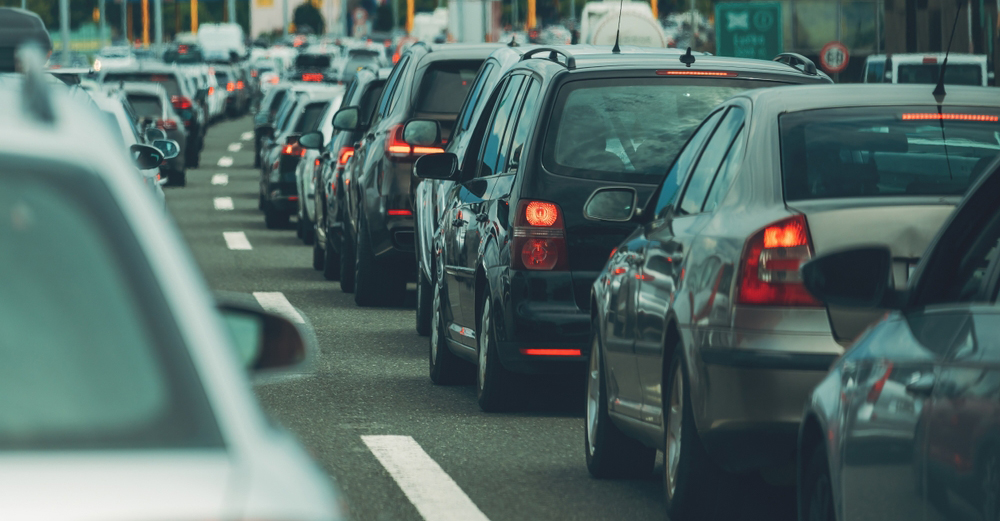
Before getting into what to do behind the wheel, it helps to understand what the commute is doing to your body. Research published in Frontiers in Endocrinology (2023) found clear negative correlations between psychosocial stress and cognitive functioning. Stress raises cortisol, and elevated cortisol impairs attention, memory retrieval, and executive decision-making. In other words, the longer you sit in a crawling jam with someone riding your bumper and a horn blaring two cars back, the less capable your brain becomes at the task it most needs to perform.
This is not a weakness; it is physiology. Recognising it is the first step toward countering it. The practical implication for driving is that stress management is not a soft add-on to safe driving habits, it is a prerequisite for them.
Know the Patterns Before You Leave the Driveway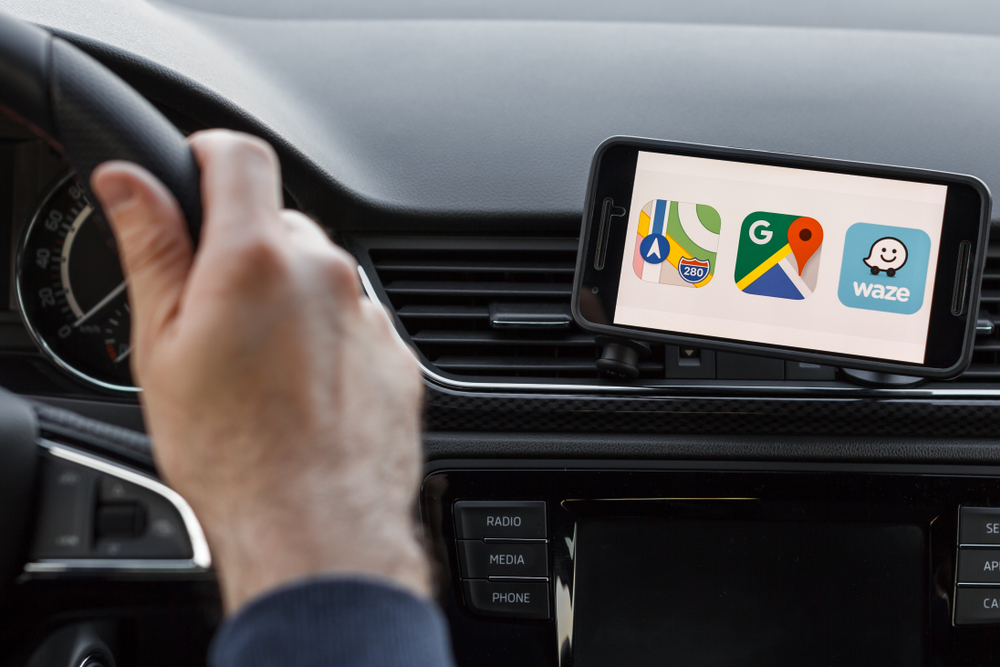
Rush hours in Singapore follow a reliable rhythm, and planning around them is one of the simplest things a driver can do. Inbound traffic peaks between 7AM and 9AM on weekdays, with the CTE, PIE, and AYE carrying the heaviest loads. The evening return builds from around 5PM and often does not ease until past 7PM. Rain compounds everything: wet roads reduce tyre friction and increase stopping distances, and visibility drops at exactly the moment when drivers are already running late and tempted to push ahead.
Leaving 15 to 20 minutes before the jam fully sets in makes a disproportionate difference. The LTA’s MyTransport.SG app provides real-time traffic information, and both Waze and Google Maps reroute dynamically based on live traffic conditions, incidents, and road closures. All apps are available on iOS and Google Play.
These apps are not optional extras — they let you make decisions from your driveway rather than from inside the jam itself. If your schedule is flexible, even shifting departure by half an hour can mean the difference between a frustrating crawl and a clear run.
Defensive Driving: The Basics That Actually Work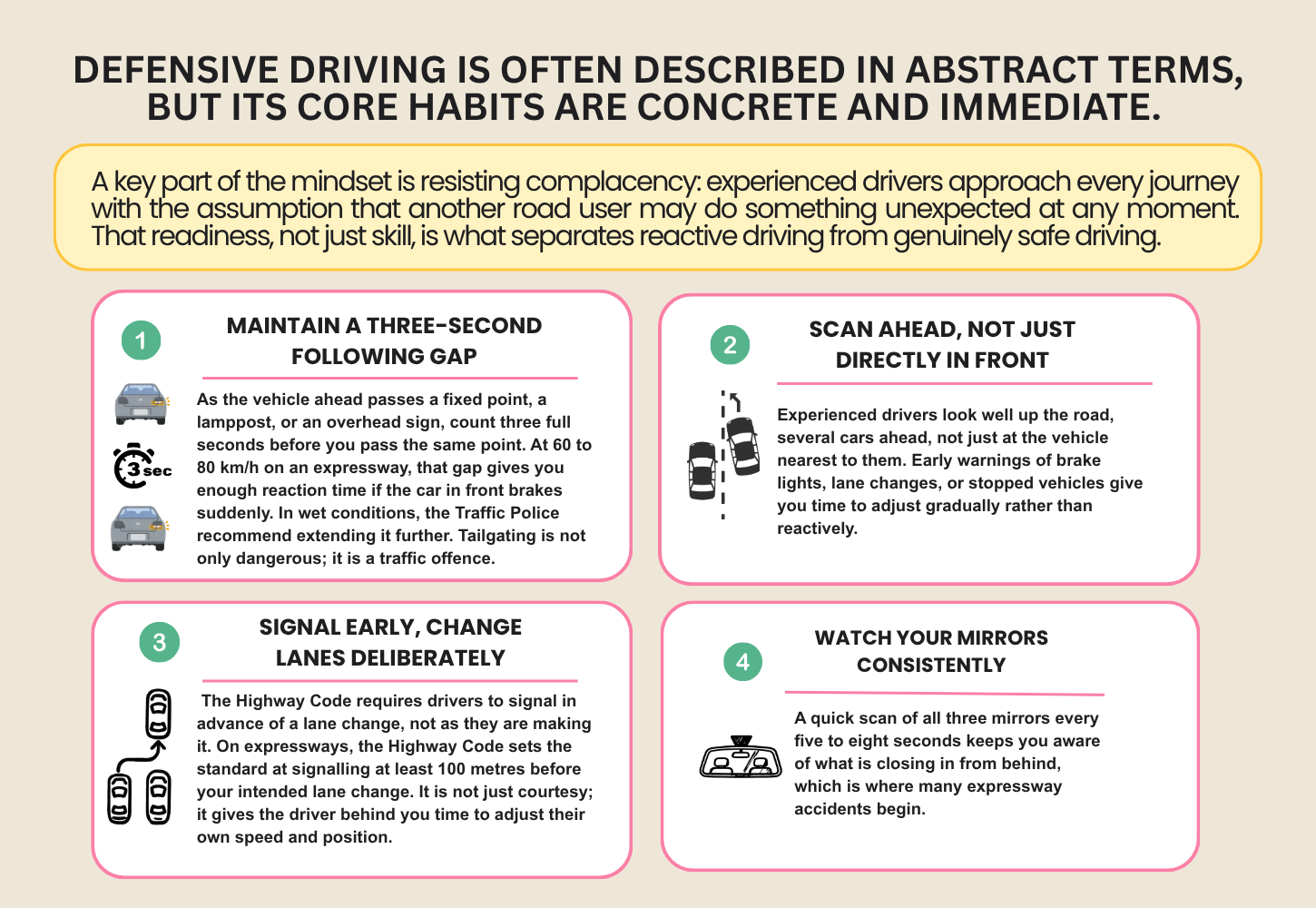
Managing Stress Without Losing Your Edge
The stop-start rhythm of a heavy jam is physiologically different from highway driving. It requires more micro-decisions per kilometre, offers almost no sense of progress, and tends to amplify minor irritants, such as a driver who cuts across without signalling, or someone who stays in the right lane at 60 km/h. These things trigger genuine stress responses.
Several techniques help. Controlled breathing, a slow inhale over four counts, hold for four, exhale over four, activates the parasympathetic nervous system and can reduce the feeling of urgency within a few cycles. It is deceptively effective and requires nothing except remembering to do it. Keeping the cabin cool and well-ventilated also helps; heat increases irritability and fatigue.
Music matters too. Research on auditory arousal suggests that high-tempo, high-volume music increases physiological arousal, which in already-stressful conditions can tip into agitation. A podcast or a calmer playlist like ambient or instrumental music tends to keep the nervous system in a more manageable state during slow traffic.
If you find yourself genuinely angry at another driver, the rule is simple: do not act on it. Do not brake-check, do not accelerate aggressively, do not pull alongside to express your feelings. Road rage incidents in Singapore have ended in prosecutions, injuries, and worse. The other driver almost certainly does not know what they did, and engaging them does not change the traffic.
Distractions: The Maths Is Unforgiving
Singapore imposes a comprehensive ban on handheld mobile phone use while driving, and the evidence behind that law is solid. At 50 km/h, looking away from the road for just two seconds means travelling roughly 28 metres blind. At 80 km/h on an expressway, it is closer to 44 metres. AA Highway Singapore points out that even hands-free calls are distracting, a finding backed by the AAA Foundation for Traffic Safety, whose research found that voice-based interactions place a high cognitive burden on drivers, causing inattention blindness that visual checks of the road cannot fully compensate for.
Global data reflects similar statistics. Cambridge Mobile Telematics reported in 2024 that drivers spent an average of nearly two minutes per driving hour handling their phones, and that phone-based distraction was a contributing factor in hundreds of thousands of crashes. The practical habit is to enable Do Not Disturb mode before starting the engine, mount your phone in a holder with your navigation set before you move, and treat mid-drive adjustments: to music, GPS, and air-conditioning, as things you sort at a red light and not while moving.
Fatigue is a less visible but equally serious distraction. The Traffic Police have long noted that drowsy driving impairs reaction time in ways comparable to alcohol intoxication. Getting seven hours of sleep before an early commute, hydrating properly, and not eating a large meal immediately before a long drive all support sustained alertness. If you feel genuinely drowsy at the wheel, pull over safely, fatigue does not improve with willpower.
Handling Tailgaters And Aggressive Drivers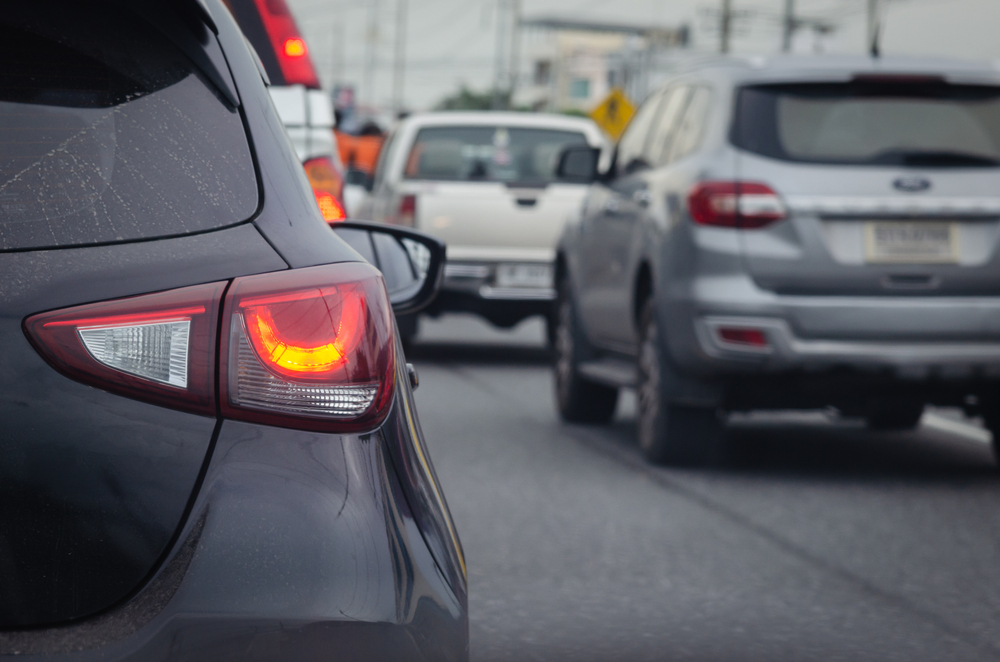
Tailgaters are a fact of life on Singapore’s expressways. The instinct to brake in response is counterproductive; it can cause a rear-end collision, and potentially escalate. The correct response is to ease off the accelerator slightly, increasing your own gap to the car ahead, which gives the tailgater more room and often prompts them to move around you when a lane opens up.
For drivers who cut in sharply from slip roads or merge without warning, the practical approach is to yield space and then gradually reclaim your following distance. The goal is flow, not territory. Chasing someone who has cut in front of you creates exactly the kind of weaving, unpredictable lane-changing that causes the pile-ups everyone is trying to avoid.
Before The Journey Begins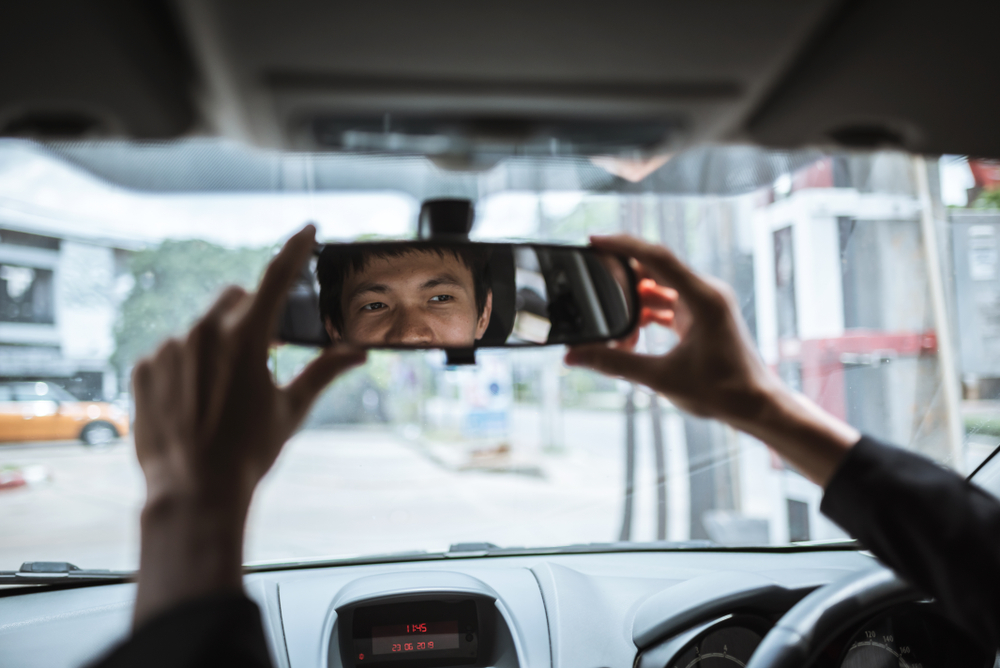
Some of the most effective road safety habits happen before you turn the ignition. Checking tyre pressure weekly, particularly before driving in rain, improves grip and reduces the risk of hydroplaning on wet asphalt. A quick mirror and seat adjustment, ensuring you have clear sightlines before pulling out of the car park, and a two-second look at traffic before merging from a slip road are small habits that collectively make a meaningful difference.
The LTA’s Vision Zero framework, which Singapore has adopted as part of its broader road safety goals, is built on the understanding that serious injuries and fatalities are not inevitable outcomes of driving; they are preventable with the right combination of engineering, enforcement, and behaviour. The behaviour part is yours.
Peak hour traffic in Singapore is not going to get significantly quieter. But the driver inside that traffic, that you can work on. Stay rested, stay a few car lengths back, keep your phone face down, and take a deep breath before you reach the junction. The road will still be there.