

Staying connected abroad doesn’t have to cost a fortune. Whether you’re heading to Tokyo or Tbilisi, sorting out your mobile data before you fly will save you money and a lot of frustration.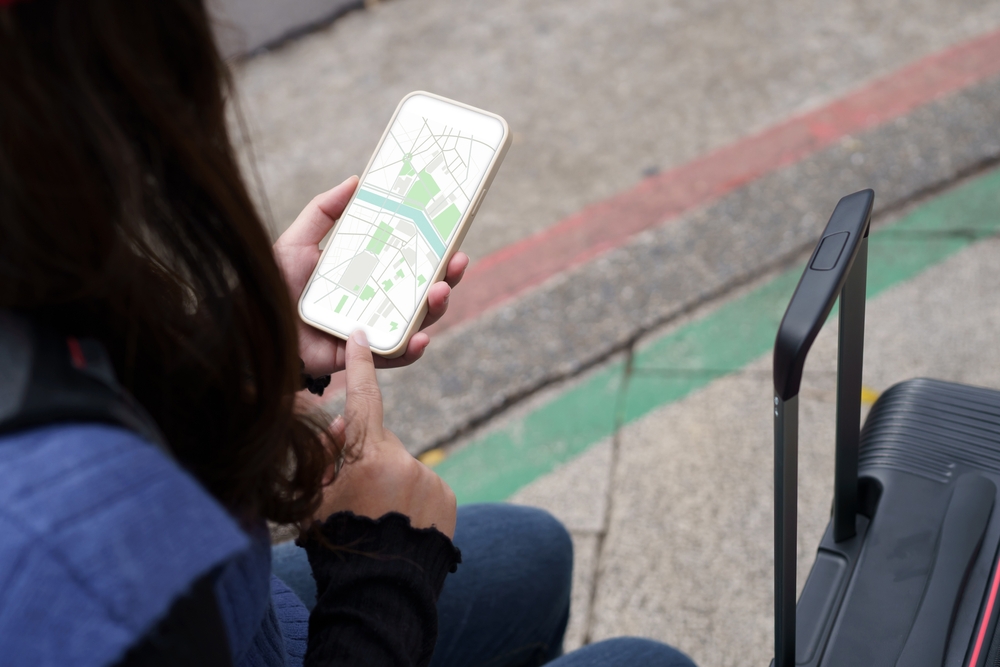
We rely on our phones constantly when we travel: maps, transport apps, hotel check-ins, and WhatsApp messages to family back home have become part of the routine. Mobile data is no longer optional; it’s part of how most of us get around. But using your phone abroad without a plan can be costly. A few days of unplanned roaming can add hundreds of dollars to your next bill, and that’s a lousy way to end a holiday.
The good news is that the options available today are far better and more affordable than they were even five years ago. This guide covers the three main ways to stay connected when you travel: international roaming, local SIM cards, and eSIMs. Knowing what each one offers will help you make the right call before your next trip.
International Roaming: Easy but Know Your Plan
International roaming lets you use your existing SIM card and phone number while connecting to a local network in whichever country you’re visiting. For Singaporeans, this is the most straightforward option. Most local telcos, including Singtel, StarHub, M1, and SIMBA, offer roaming add-ons that you can activate before or during your trip through their respective apps. Singtel’s ReadyRoam plans cover up to 157 destinations. StarHub and M1 have similar add-on plans that cap your data spend at a fixed rate.
The main appeal of roaming is convenience. You keep your Singapore number, so calls and messages from contacts back home come through as normal. There’s no swapping of SIM cards, no tiny piece of plastic to lose, and setup takes just a few taps in an app. For travellers who need to stay reachable on their local number throughout a trip, this matters. If you already use a local eSIM from your Singapore telco, enabling roaming is even simpler: just toggle it on through your provider’s app, with no physical SIM swap needed.
The cost, however, depends on your plan. Even with an add-on plan, you’re usually paying more per gigabyte than you would with a local SIM. And if you go over your data cap or forget to activate an add-on before leaving, the default pay-as-you-go roaming rates can be painful. Some standard roaming plans charge several dollars per megabyte. It’s the kind of charge that shows up on your bill weeks after you’ve stopped thinking about the trip.
Roaming works best for short trips, particularly two or three-day business visits to nearby countries where your telco offers a flat regional rate covering most of Southeast Asia. For anything longer, the cost can quickly outpace the other options.
Local SIM Cards: Best Value, Small Trade-Off
Buying a local SIM card on arrival has long been the go-to move for cost-conscious travellers, and for good reason. You land, find a telco booth or convenience store at the airport, pick up a tourist SIM, and you’re connected within minutes. In most of Southeast Asia, Japan, South Korea, and across Europe, tourist SIMs are widely available and very affordable.
In Thailand, for instance, an AIS or DTAC tourist SIM with several gigabytes of data costs a few hundred baht, well under S$20. In Japan, data-only SIMs from providers such as IIJmio are popular with visitors who mainly need connectivity rather than a local number. In Europe, a SIM from Three UK is a practical pick for multi-country trips, its Feel At Home policy lets customers use their data and call allowances in over 40 countries at no extra cost, including Australia, France, Germany, Hong Kong and the United States. In each of these cases, the cost per gigabyte is significantly lower than what you’d pay through a Singapore roaming plan.
The trade-off is that you’ll be using a different number while you’re away. If someone needs to reach you on your Singapore number, they won’t be able to call or text you directly. For most travellers, this is less of an issue today since WhatsApp, Telegram and FaceTime all work over data regardless of which SIM is in your phone. But it’s worth knowing in advance if you’re expecting important phone calls.
Your phone also needs to be unlocked. Most handsets bought outright in Singapore are SIM-free, but if yours is tied to a telco contract, check before you travel. A phone locked to a specific network won’t accept a foreign SIM, which will leave you scrambling at the airport.
For longer trips, or any trip where data is the priority, a local SIM is usually the most cost-effective choice. A week’s worth of data in most Asian countries costs a fraction of what you’d spend on roaming add-ons for the same period.
eSIMs: Convenient, but Check Your Phone First
eSIMs are the newest option, and they’ve changed the way frequent travellers handle connectivity. An eSIM is a digital SIM card built directly into your device. Instead of swapping a physical card, you download a data plan onto your phone. There’s no queuing at a telco booth and no physical card to keep track of.
Services like Airalo, Holafly, and Nomad, sell eSIM plans for countries and regions worldwide. You buy a plan online before you travel, scan a QR code to install it, and your phone is ready to connect the moment you land. If you run through your initial data allowance, topping up is straightforward: you do it through the provider’s app, without hunting for a SIM booth. You can also track your usage in real-time, so there are no nasty surprises.
For many destinations, an eSIM plan works out cheaper than roaming and more convenient than hunting for a SIM on arrival. It’s a particularly good option for multi-country trips, where you’d otherwise need to buy a new local SIM in each country.
The main limitation is device compatibility. eSIMs require a relatively recent smartphone. The iPhone XS and later support eSIM, as do many newer Android devices, including Samsung’s Galaxy S and Z series and recent Google Pixel models. However, some phones, such as most sold in China, lack eSIM functionality even when the same model sold elsewhere includes it. Before assuming your device works, it’s worth checking your exact model specifications.
It’s also worth knowing that most travel eSIMs are data-only, without a local phone number, the same trade-off you’d face with a data-only local SIM.
How to Pick the Right Option
The right choice depends on your trip.
For a short business trip to a nearby country, a roaming add-on from your Singapore telco is often the simplest and most practical solution. For a longer leisure trip to a single destination, a local SIM usually wins on value. For multi-country travel, or if you prefer to have everything sorted before you leave home, an eSIM is worth looking into.
It’s also worth thinking about how much data you’ll actually use. In many cities across Asia, free Wi-Fi at cafes, hotels and shopping centres is common enough that you can get by on a smaller plan than you might expect. That said, free public Wi-Fi carries security risks, on an unsecured network, your data can be intercepted. Use a VPN if you’re accessing anything sensitive, such as banking apps or personal accounts. Downloading offline maps on Google Maps or Maps.me before you fly helps stretch your data further.
Before any trip, spend a few minutes researching your options. Check what your telco offers, compare eSIM rates on Airalo or similar platforms, and look up whether tourist SIMs are available at your destination airport. A little research before you leave home is far better than an unexpected charge on your next bill.
No Single Answer
There’s no single answer that works for every trip.
Roaming is convenient; the cost depends on your plan, so check it before you travel. Local SIMs offer the best value but need a bit of planning. eSIMs sit somewhere in between, offering solid value and genuine convenience for those with compatible devices.
The right choice comes down to where you’re going, how long you’ll be there, and how much you rely on your phone. Whatever you decide, sort it out before you leave. Scrambling for a SIM card in an unfamiliar airport is nobody’s idea of a good start to a trip.