

Stressful moments are hard to avoid behind the wheel — breakdowns, near misses, tyre punctures, and sudden obstacles can occur wherever you drive. Stay calm and in control with the simple steps this guide offers.
 Driving can be mentally tiring. When something unexpected happens, like a sudden breakdown or a near miss, your body reacts before your mind catches up. Your heart races, your grip tightens, and it feels like everything speeds up at once.
In Singapore, where roads are frequently dense and busy with people and vehicles, staying calm directly affects how safely you react to unexpected situations. A calm driver can choose to pull over safely, signal clearly, and call for help. A panicked driver may brake at the wrong moment, swerve unnecessarily, or forget basic steps that keep everyone else safe.
Pause, Breathe, Check
Whether you sense something going wrong or find yourself caught in the middle of it, the first step is almost always the same. You need a few seconds to bring your stress level down so you can think clearly. Slow your breathing and give simple instructions to yourself in your head.
Most driving safety guides start with “stay calm and assess the situation” because panic clouds judgement and leads to rushed decisions that can make things worse. Turn on your hazard lights if you are slowing down and preparing to stop. If it is safe to do so, and then do a quick mental check. Ask yourself:
- Am I in danger where I am?
- Can I move to a safer spot?
- Do I need to get out of the car or stay inside with the doors locked?
This pause helps you act, not just react.
Breakdowns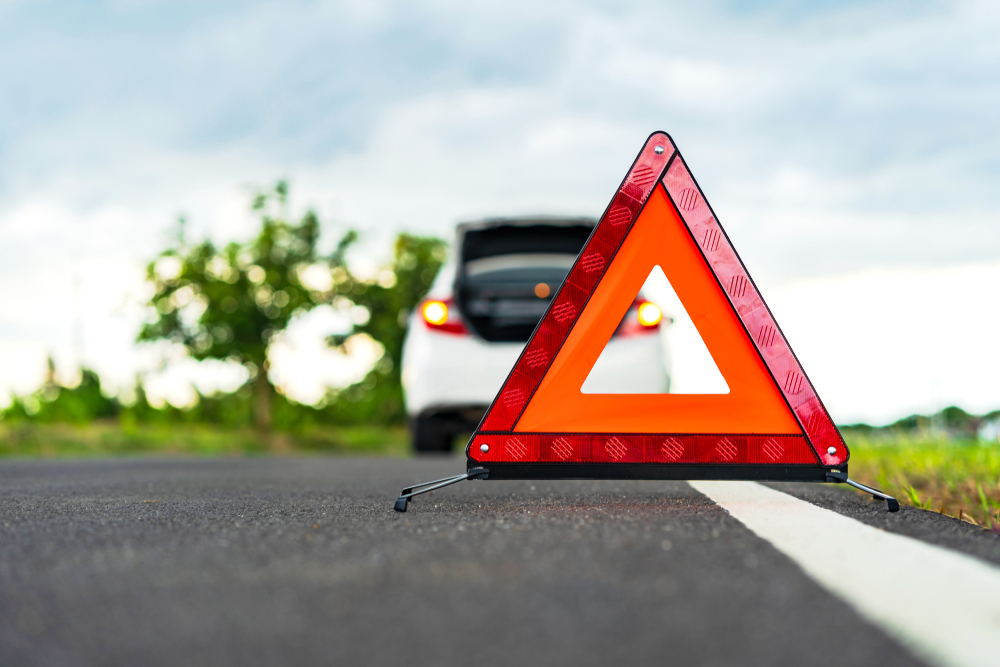 A breakdown can be as simple as the engine dying or as dramatic as smoke from the bonnet. Either way, the steps are similar. You want to get out of the flow of traffic, make yourself visible, and then seek help.
If the car is still moving,
- signal early
- keep your speed steady
- steer gently to the left shoulder, an emergency bay, or the nearest safe exit
Do not cut across lanes suddenly.
Once stopped,
- switch on your hazard lights
- engage the parking brake
- place your car in park or in gear
- place your warning triangle behind the vehicle 20 metres behind your vehicle if it is safe to do so. If you breakdown on the expressway, keep safe in your car until Roadside Assistance arrives to help.
In Singapore, if you can, move to a safe spot away from traffic barriers and stand behind the guardrail rather than in front of the car, especially on expressways.
If it feels unsafe to get out, stay in the car with the seatbelt on and doors locked, and call for roadside assistance or emergency services. Many breakdown guides stress that you should not try to fix major faults on the roadside if traffic is fast and space is tight. Your safety matters more than getting the car started again. If the car has stalled or cannot be moved — for instance if it has broken down mid-lane on an expressway — switch on your hazard lights immediately and call for emergency services or roadside assistance. Do not attempt to push the car yourself if traffic is moving around you. Stay inside the vehicle with your seatbelt on and wait for help; on a fast-moving road, remaining in the car is generally safer than standing outside.
Tyre Punctures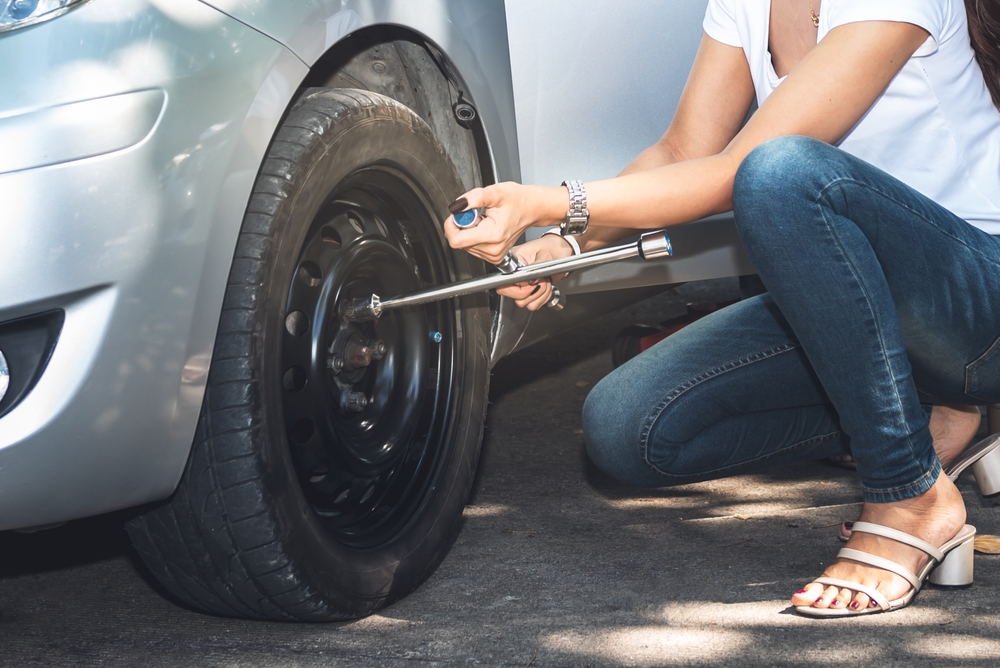
A puncture often comes with a loud pop or thud, followed by a pull to one side. It’s shocking, but you have more control than it feels like in the moment. Your main job is to keep the car stable and get off the road safely.
If a puncture happens while you are moving, here is what to do:
- Avoid braking hard
- Hold the steering wheel firmly
- Keep the car straight
- Ease off the accelerator
- Let the car slow down
- Gently steer (signal where necessary) it towards a safe, flat area away from traffic (eg road shoulder, car park entrance, emergency bay)
- Turn on the hazard lights
- If you have a reflective warning triangle, place it a distance behind your car so approaching drivers can see you early
Changing a tyre by the roadside is not always a good idea in Singapore traffic, especially on expressways or in the rain. If traffic is heavy or there is not much space, call for roadside help. If you breakdown on the expressway, contact LTA via their hotline at 1800 2255 582, and they will send their recovery crew to bring you and your vehicle to the nearest designated carpark outside the expressway. AAS offers 24/7 Roadside Assistance Services that will bring you to the closest workshop. Call them at 6748 9911 rather than trying to do it yourself. Local tyre and roadside guides advise drivers to prioritise a safe location, hazard lights, and warning triangles before even thinking about tools and jacks.
Near Misses, Sudden Braking, Close Calls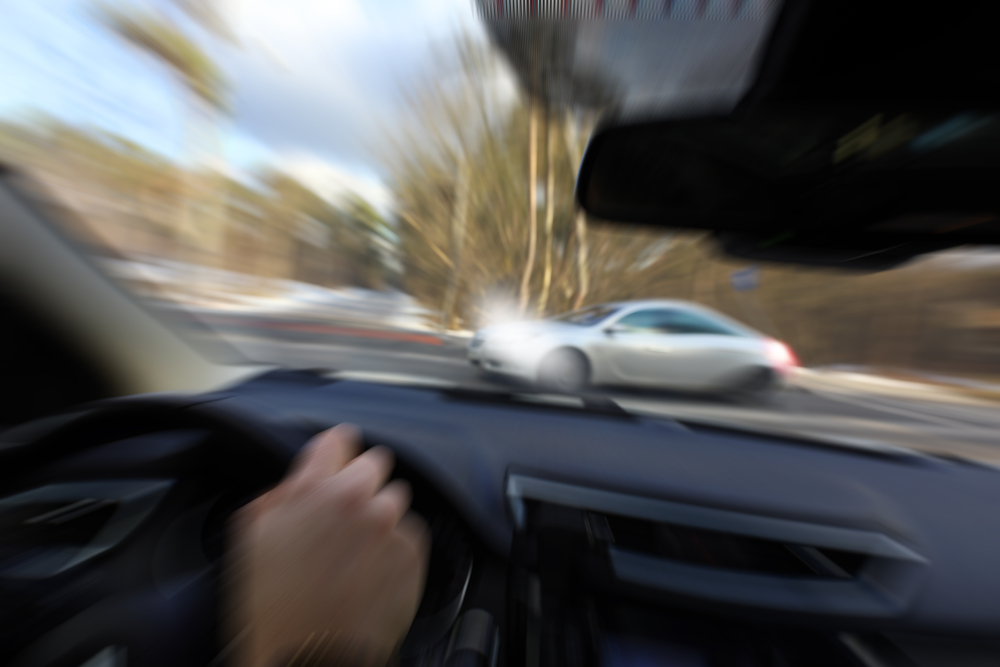
A near miss can shake you up more than an actual accident sometimes. Maybe someone cut into your lane too closely or braked suddenly in front of you. Your heart can keep pounding long after the moment has passed.
If you are still moving and in control, keep your eyes on the road and hold your lane. Resist the urge to swerve sharply in anger or fear. Defensive driving advice suggests focusing first on stabilising your speed and space, then creating distance from the risky driver. Once traffic allows, move to a calmer lane or let the aggressive or careless driver go ahead.
If you feel too shaken to focus, pull over at the next safe spot (eg petrol station, car park, road shoulder) to catch your breath. Take a few minutes to calm down before you continue driving. This is especially important in a dense environment like Singapore, where small mistakes can have big effects because of limited space and many nearby vehicles.
Aggressive Drivers
Road rage is stressful and scary. It also pushes people into rash, dangerous decisions like brake-checking, speeding up to box in another car, or getting out to confront the other driver. The safest choice is usually to disengage and avoid confrontation.
Safety experts often recommend avoiding eye contact and aggressive gestures. Let the other driver pass if you can do so safely. Do not race, block or brake-check. If someone is tailgating or driving erratically around you, maintain a steady speed and give yourself more space in front so you have room to slow down if needed.
If you feel threatened, head towards a public and well-lit place (eg petrol station, a 24-hour eatery, busy car park) rather than stopping by the roadside. Stay in the car with doors locked. Use your horn briefly to attract attention if the person approaches your vehicle, and call the police if you feel at risk. In Singapore’s context, where enforcement is strict, it helps to remember that reporting dangerous drivers is also part of keeping the roads safer for everyone.
Sudden Obstacles: Debris, Animals, Or Pedestrians 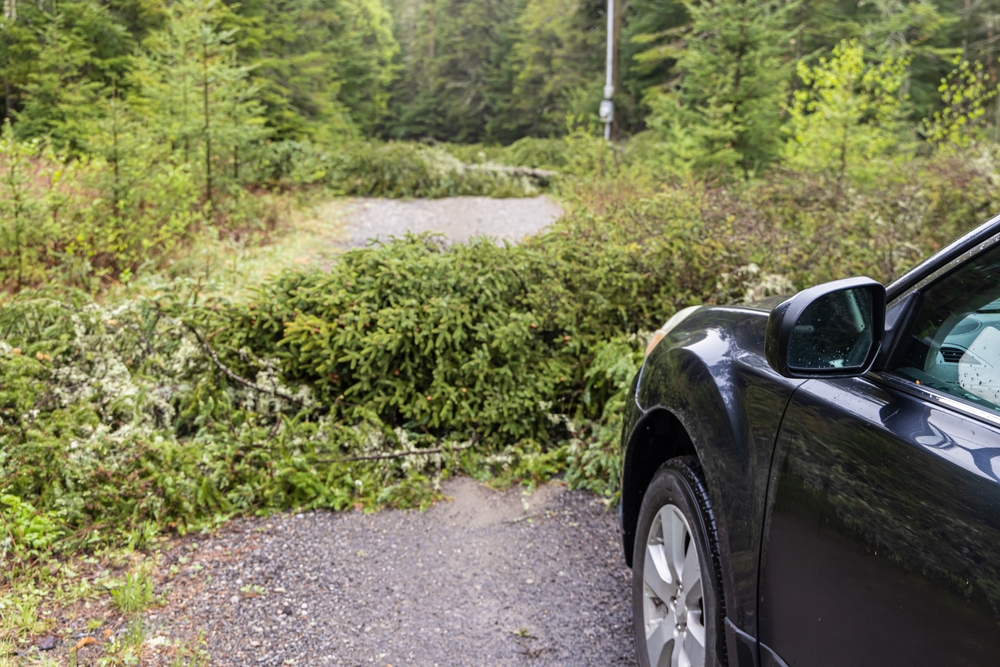 Sometimes trouble appears right in front of you: a fallen branch, a piece of metal, or a pedestrian stepping off the kerb without warning. Your instinct might be to yank the steering wheel, but that can make the situation worse.
Safe driving advice usually places emphasis on controlled braking and steering in a straight line above sudden swerves. If you can stop in time by braking firmly and keeping the wheel straight, do that. If you must steer, do so smoothly, not in a violent jerk. On Singapore roads, where lanes are narrow and there may be motorcycles in your blind spots, sudden swerves are risky.
If you do make contact with an animal, pull over at the nearest safe spot and call the relevant authorities. In Singapore, the Animal and Veterinary Service (AVS) handles injured wildlife; the police should also be informed if the incident occurred on a public road. Do not try to move an injured animal yourself.
If a pedestrian steps out and you cannot stop in time, keep braking in a straight line rather than swerving sharply, which could send you into other traffic. If there is a collision, stop the car immediately, switch on your hazard lights, and call 995 for emergency services. Do not leave the scene.
If you hit debris or a small object and the car still feels normal, continue to the nearest safe stopping point before pulling over to check for damage. For large obstacles that remain on the road, alert other drivers or contact the authorities to have it cleared once you are safely out of the way.
Calming Mental Habits Real calm behind the wheel is built long before anything goes wrong. The habits you practise in ordinary driving are what carry you through when something unexpected happens.
Many road safety and breakdown guides highlight preparation, like knowing where your hazard light switch is, keeping a reflective triangle in the boot, and saving roadside assistance numbers on your phone. Practise simple breathing exercises when you are stuck in a jam so they feel natural later. You can use a basic pattern like breathing in for four counts, holding for four, and breathing out for six.
You should also learn to accept that stressful events will happen sometimes. In a small and busy place like Singapore, you will meet impatient drivers, close shaves, and sudden rain that reduces visibility. You don’t have to like it but, if you expect it, you’re less likely to freeze when it happens.
Practical Steps To Use Now
You don’t need to change your whole personality to handle stressful road situations better. Small, practical steps make a big difference when things go wrong. Here are some simple habits you can start building:
- Keep your phone charged and store key numbers such as local roadside assistance and emergency contacts.
- Make sure your car has a warning triangle, torch light, and basic tools, and that you know where they are.
- Before long trips, check fuel level, tyre pressure, and engine temperature and ensure that your vehicle is well maintained so you’re less likely to face a preventable breakdown.
- When something stressful happens, focus first on getting to a safe place, then on the car, then on admin like photos or insurance. Safety comes first.
Over time, these internalised habits lower your stress level as a driver. And when the rare big moment occurs, you’ll instinctively know what steps to take instead of relying on adrenaline and guesswork.