

The haze is back in Singapore, and it doesn’t stop at the car door. Here is how to use your air-conditioning, look after the cabin air filter and reduce fine-particle exposure during your daily drive.
When The Haze Finds Its Way In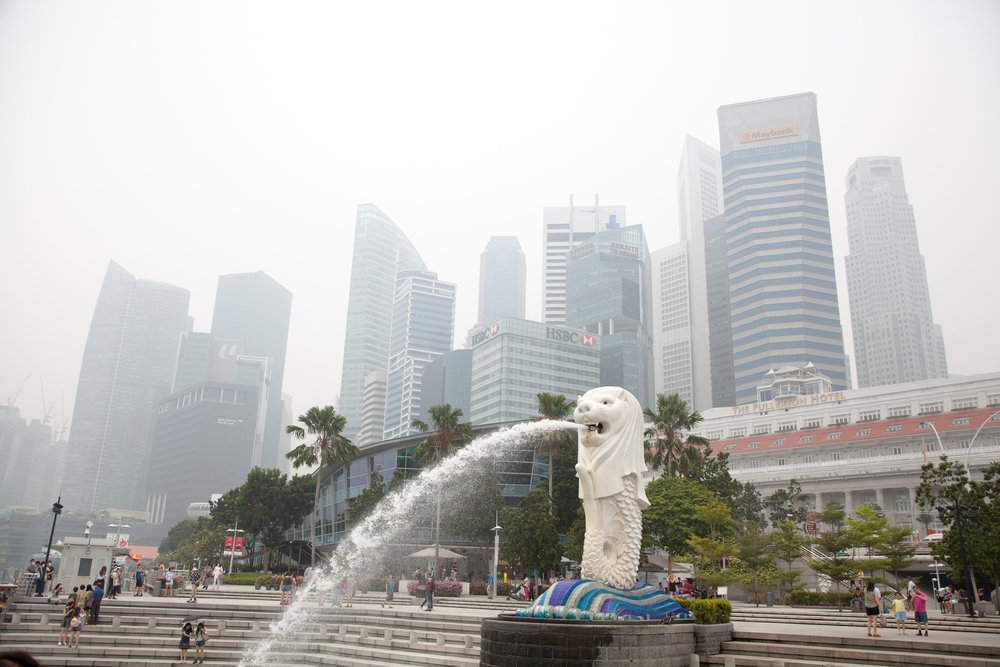
Singapore’s air quality turned unhealthy on 4 September this year. It was the first time since October 2023 that haze pushed the 24-hour Pollutant Standards Index (PSI) past 100, and things got worse from there. On 9 October, the PSI in the central region reached 192, as smoke from regional fires drifted across. On 18 October, it climbed to 230 in the west, which is in the very unhealthy range.
Most drivers spend a good part of the day in our cars, and it’s easy to assume the cabin is a safe bubble, but it isn’t. A car draws in outside air through its ventilation system, and while haze particles can enter with it, you have more control than you might think. How you set the air-conditioning, the state of the cabin air filter and a few simple habits all make a real difference to what you breathe on the road.
Why Your Car Is Not a Sealed Box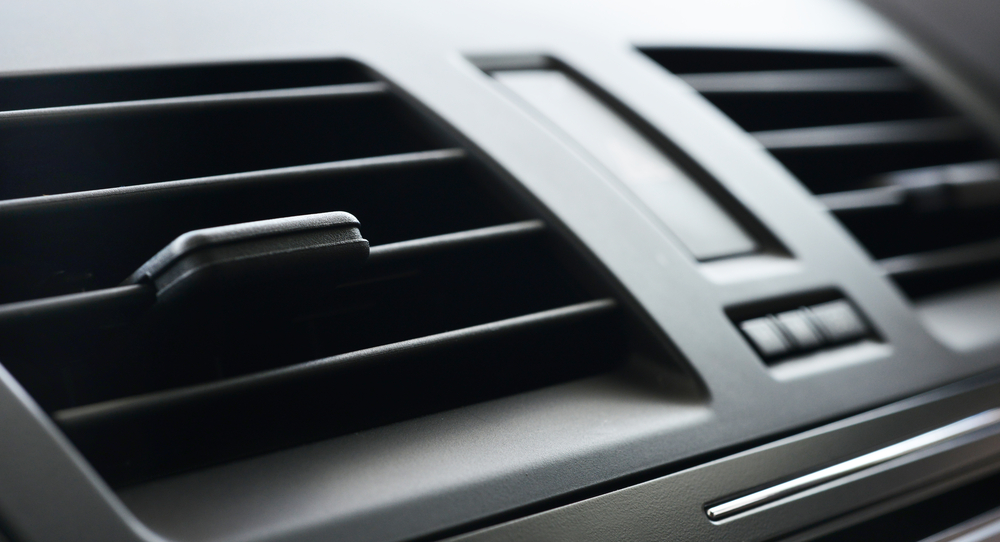
The pollutant that matters most during haze is fine particulate matter, known as PM2.5, which covers particles 2.5 microns across or smaller. The National Environment Agency (NEA) notes that these particles get into air-conditioned buildings through fresh-air intakes and gaps, and a car works in much the same way.
Your car’s ventilation can take its air from one of two places. In fresh-air mode, the fan pulls air in from outside, usually through vents at the base of the windscreen. In recirculation mode, it reuses the air already in the cabin and reduces the amount of outside air being drawn in. Depending on the vehicle’s ventilation design, recirculated air may also pass through the cabin filter. The button for this usually shows a car outline with a curved arrow inside it.
Open windows undo all of this. Research on in-vehicle air pollution has found that opening windows can substantially increase exposure to particles from surrounding traffic. So while the haze lasts, keep the windows closed where possible.
Using Recirculation The Right Way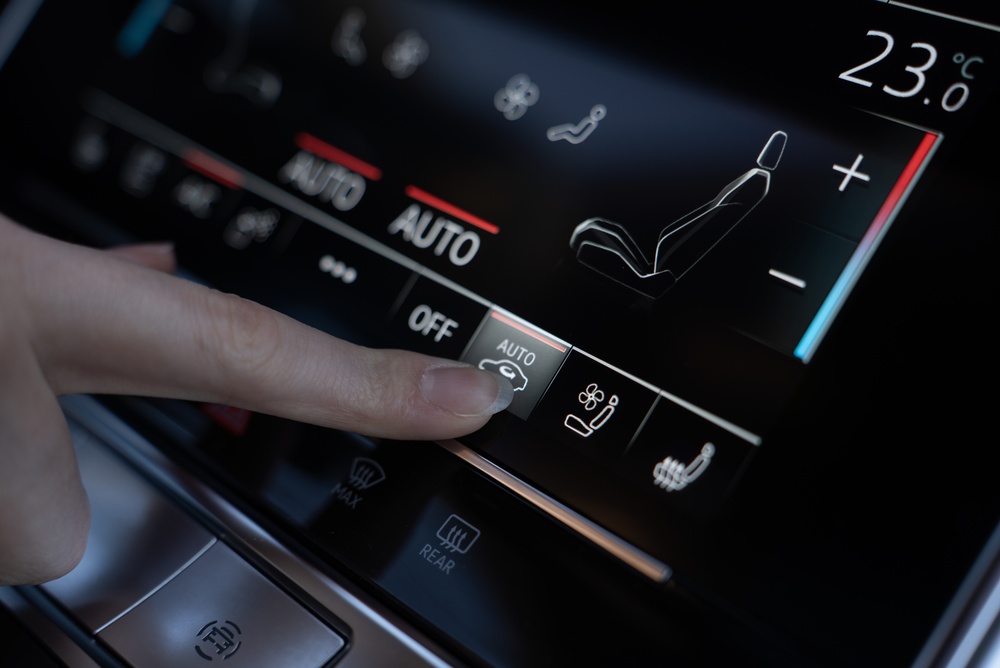
Recirculation is one of the most useful settings you have during haze. Research by the University of Southern California found that recirculation could substantially reduce the concentration of particles inside a vehicle compared with drawing in outside air. The extent of the reduction depended on factors such as particle size, vehicle characteristics and ventilation settings.
A 2023 study by researchers from Chalmers University of Technology and Volvo Cars reached a similar conclusion. Its simulations found that recirculating 70 per cent of the cabin air lowered PM2.5 by 55 per cent on average with a new filter. It also reduced the energy the climate system used, since cooling air that is already cool takes less work than cooling hot air from outside. However, these findings reflect particular test conditions and should not be taken as the level of protection every vehicle will achieve.
In practice, this means building the habit early. Close the windows, switch on the air-conditioning and press the recirculation button before you leave the carpark. Keep it on when you are stuck behind buses and lorries or driving through a tunnel, where pollutant concentrations can be elevated. If your car has an automatic climate setting, check the owner’s manual to see how it handles the air intake, as some systems switch between modes on their own.
Letting The Car Breathe
Recirculation has one drawback. Everyone in the car breathes out carbon dioxide, and in a closed cabin it canbuild up. Research has shown that carbon dioxide concentrations may rise during prolonged recirculation, particularly when several passengers are travelling in a relatively well-sealed vehicle.
The challenge is balancing two things: keeping polluted outdoor air out while maintaining adequate ventilation inside. There is no single fresh-air interval that suits every car, journey or passenger load. So, on a solo drive to work, you may be able to use recirculation for much of the journey, provided the cabin remains comfortable and the windows stay clear.
With a full car on a longer journey, consider allowing some fresh-air exchange when outdoor conditions are better, or using the vehicle’s automatic air-quality and ventilation functions if available. If you start to feel drowsy or the cabin smells stale, check the ventilation settings and stop somewhere safe if necessary. Do not compromise windscreen demisting or visibility to keep recirculation on.
Checking The Cabin Air Filter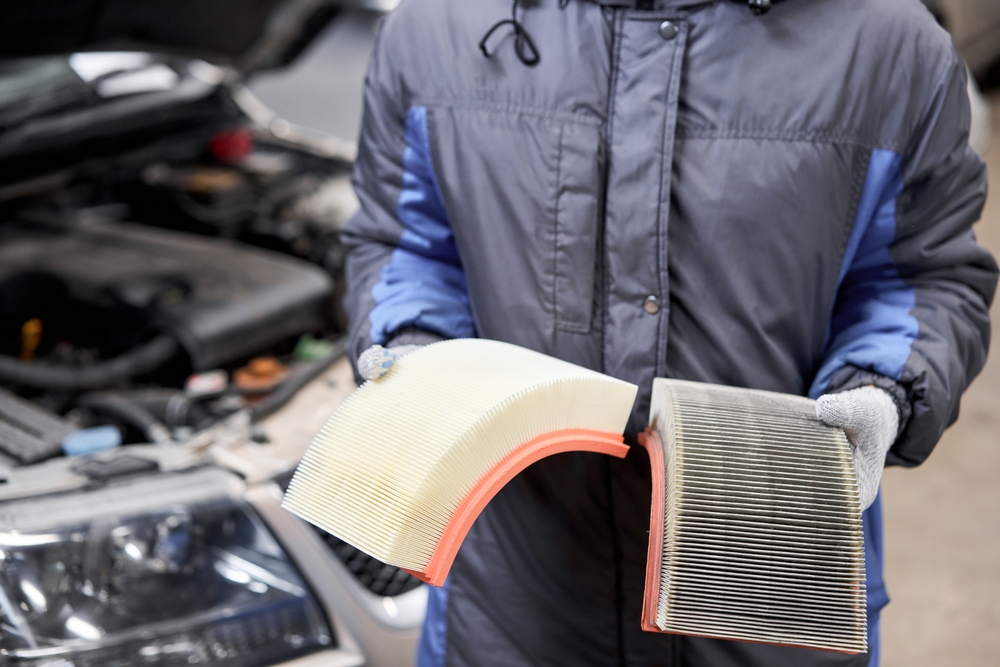
The cabin air filter is another important line of defence against airborne particles. If that filter is clogged or worn, it may restrict airflow or perform less effectively, depending on its design and condition. The Chalmers researchers found that an aged filter performed worse, especially when outdoor pollution was high. With an old filter, the drop in PM2.5 from recirculation fell from 55 per cent to 39 per cent under the conditions examined in the study.
Most cabin air filters sit behind the glovebox or under the dashboard, though in some cars they are in the engine bay near the base of the windscreen. Replacement intervals vary by manufacturer and vehicle model, so the owner’s manual should be your starting point. As a general guide, the American motoring association AAA says manufacturers usually recommend a change every 15,000 to 30,000 miles, or roughly 24,000 to 48,000km.
Filters may need earlier inspection or replacement if the car is frequently driven in dusty or polluted conditions. Singapore’s humidity matters too, even when there is no haze. A damp, dirty filter is a common cause of musty smells, so some local workshops suggest changing it once a year whatever the mileage. The signs to watch for are weaker airflow from the vents, windows that fog up easily, smells that won’t go away and dust building up inside the car. These symptoms can also have other causes, so they do not automatically mean the filter needs replacing.
During a long haze spell, ask your workshop to check the filter at your next servicing, or inspect it yourself if your vehicle’s manual provides instructions. A filter caked in dust and debris may need replacing. On some models the filter is easy to reach, but on others it means removing the glovebox or trim panels, so leave it to your workshop if you are not sure.
Filters are not all the same. A standard cabin filter may be effective at trapping larger particles without necessarily offering high-efficiency filtration of PM2.5. Its performance depends on the filter medium, construction and tested particle-size range. High-efficiency filters designed to capture finer particles may provide better protection.
Research involving taxis has also shown that suitable cabin filtration, combined with closed windows, can reduce occupants’ exposure to fine particles. A University of California, Los Angeles study of 17 taxis found that keeping the windows closed and fitting a high-efficiency cabin filter cut PM2.5 inside the cabin by 37 per cent compared with normal driving. Filters with activated carbon may help reduce certain gases and odours associated with smoke, although they do not remove every pollutant. Check that any replacement fits your model before you buy it, and avoid filters that could unduly restrict airflow through the ventilation system.
Keeping Particles Out Of The Cabin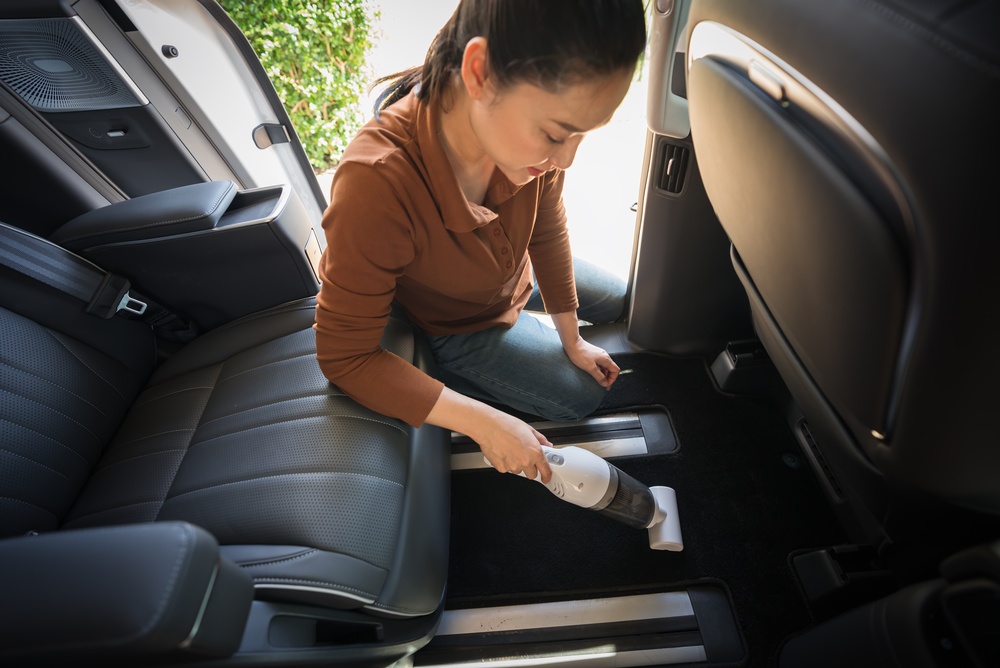
Some haze will still get in each time a door opens. Get in and out quickly, and keep the windows shut while you wait at pick-up points. Where you can, park in a basement or covered carpark rather than in the open. Fine dust also settles on the dashboard, seats and floor mats, so wipe hard surfaces with a damp cloth and vacuum the interior more often while the haze lasts. A dry duster tends to stir particles back into the air.
Portable car air purifiers are another option but choose with care. Some devices sold as air purifiers work by producing ozone, which irritates the lungs. The California Air Resources Board has advised the public to avoid ozone generators, warning that ozone can damage the lining of the nose and lungs and make asthma worse.
If you do buy one, pick a unit that cleans the air through a physical filter rather than one that relies on ozone. Check its filtration specifications, suitability for the cabin size and whether it can be secured safely without obstructing the driver or airbags. For haze, look for a unit with a HEPA filter. The US Environmental Protection Agency says HEPA filters can in theory remove at least 99.97 per cent of particles at 0.3 microns, the size they find hardest to catch. NEA also suggests checking the clean air delivery rate (CADR), which shows how much clean air a unit can deliver for the space it is used in. A portable purifier does not replace the cabin air filter. The filter cleans the air coming in through the vents, while a portable unit only works on air already inside the car, so during haze it is best to look after both.
Looking Out For Passengers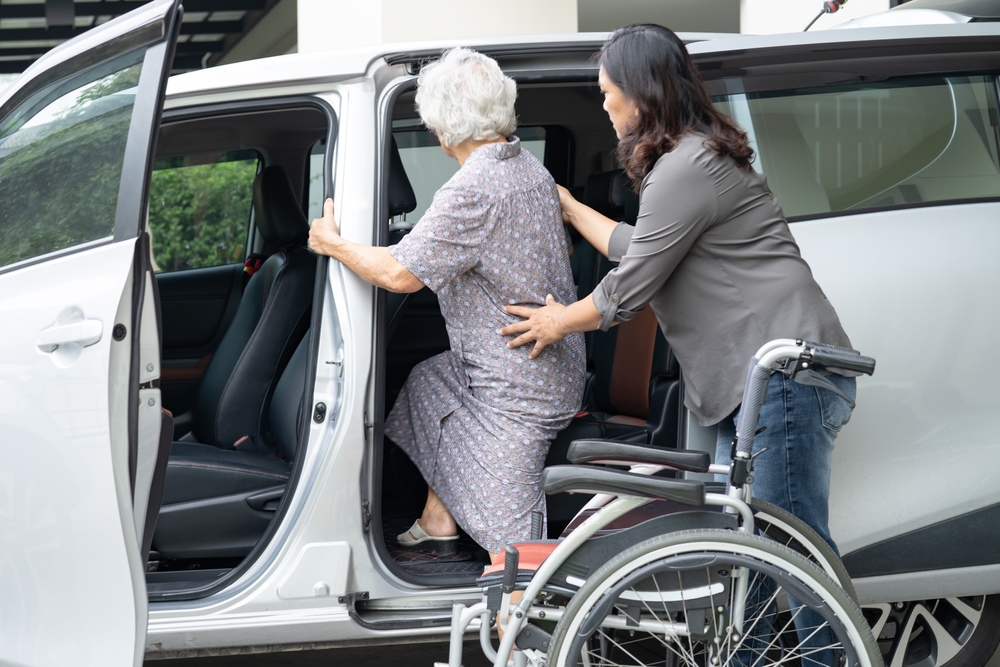
Haze affects some people more than others. NEA’s health advisory names the elderly, pregnant women, children and people with chronic heart or lung conditions as groups who need to take more care.
If you are taking elderly parents to a clinic or collecting children from school, close the windows and run the air-conditioning on recirculation before they get in, where practical. This may help reduce the amount of polluted outdoor air entering the cabin, although it cannot guarantee clean air. Keeping a few properly stored N95 respirators in the car, or carrying them with you, also helps for the walk between the car and the door. Make sure they fit the wearer properly; standard adult N95 respirators may not fit young children.
Before a longer trip, check the 24-hour PSI and one-hour PM2.5 readings on NEA’s haze website or the myENV app. The 24-hour PSI is used for general health advisories, while the one-hour PM2.5 reading gives a more immediate indication of fine-particle concentrations. They serve different purposes and should not be interpreted as interchangeable measures. If the numbers are climbing, it may be worth travelling at a different time, particularly for passengers who are more vulnerable to haze-related health effects.
Clearer Air For The Drive Ahead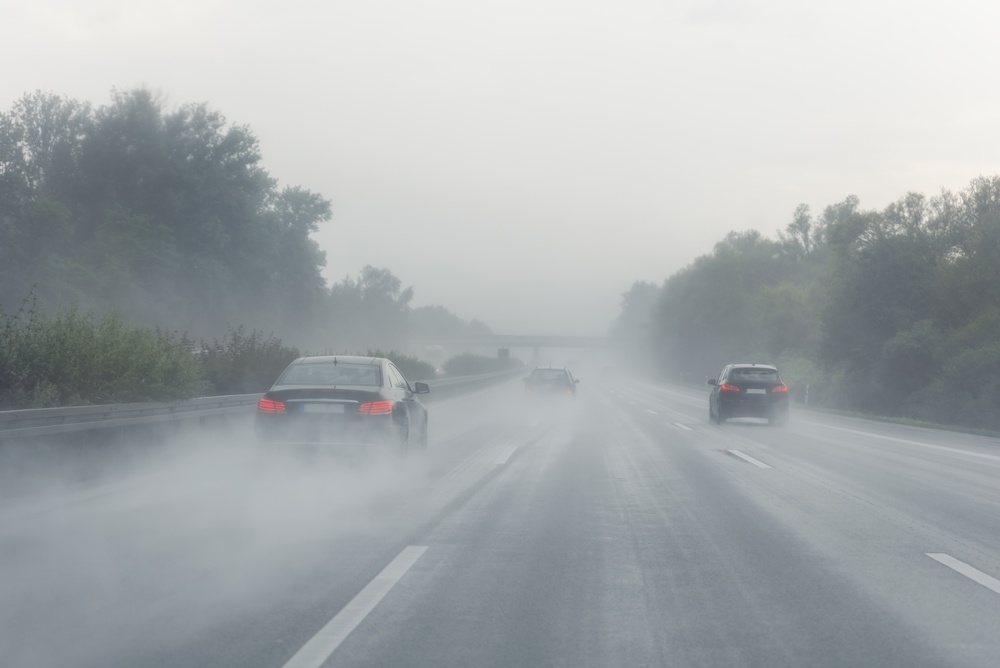
The haze may be with us for a while. Its duration depends on regional fire activity, rainfall and prevailing winds, so conditions can change from one day to the next. Check the latest PSI reading on the Official NEA website for the latest readings rather than assuming clearer skies mean that the air quality has improved.
You can’t control the smoke, but you can take steps to improve the air quality in your car. Keep the windows up, use recirculation when outdoor pollution is high and balance it with adequate ventilation, especially on longer journeys with several passengers. Check the cabin air filter, change it if necessary and think about a higher-grade one that is compatible with your vehicle. Clean the interior more often. None of this needs to take much time or money, and it can help make the daily drive more comfortable until the skies clear.