

From Tokyo to Buenos Aires, global road safety campaigns are saving lives and transforming driving culture. Here’s what works, and why we should pay attention.
Every year, road traffic crashes claim approximately 1.19 million lives and leave over 50 million people seriously injured, with the burden falling heaviest on developing nations and young people. As cities grow and traffic intensifies, the urgency to make roads safer has never been greater. Around the world, governments, NGOs, and international organisations are rolling out creative campaigns to change behaviours and save lives. But which campaigns worked, and what can we learn from their success?
The Power Of A Campaign: More Than Just A Message
A truly effective road safety campaign is more than a catchy slogan or a viral video. According to the EU’s CAST project, these initiatives are
“-purposeful attempts to inform, persuade, or motivate people in changing their beliefs and/or behaviour to improve road safety as a whole or in a specific, well-defined large audience, typically within a given period through organised communication activities involving specific media channels often combined with interpersonal support and/or supportive actions such as enforcement, education, legislation, enhancing personal commitment, rewards, etc.”
Meta-analyses show that road safety campaigns are linked to a significant 16% increase in risk comprehension and a 9% reduction in road accidents, even when measured independently of enforcement actions. The most successful campaigns are those that combine clear targeting, tailored messaging, and supportive actions like increased police presence or legislative changes.
International Campaigns That Changed The Game
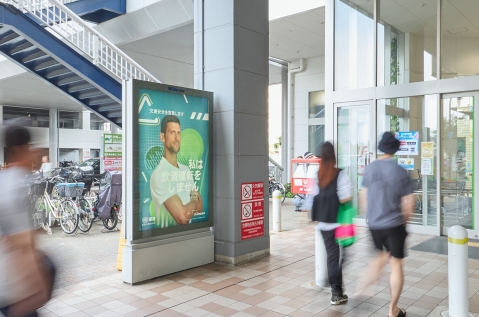
“Make a Safety Statement” – United Nations & JCDecaux (Global, 2023–2025)
Launched in 2023, this campaign is a bold attempt to halve global road fatalities by 2030. Supported by 17 international celebrities and athletes, “Make a Safety Statement” delivers simple, impactful messages: like the importance of wearing seat belts, obeying speed limits, and respecting vulnerable road users, across 40+ countries in high-visibility public spaces such as airports and metro stations.
Key features:
- Celebrity advocacy: Leveraging global icons like Michelle Yeoh, Novak Djokovic, and Kylie Minogue to reach a broad audience.
- Universal messaging: Focused on universally relevant behaviours (seat belts, speed, pedestrian safety).
- Massive reach: Targeting 80 countries and 1,000 cities by the end of 2025.
- Lesson learned: Harnessing the power of celebrity and mass media can break through apathy and reach millions, but the message must be clear, actionable, and repeated across multiple platforms.
“Streets for Life – #Love30” – WHO, FIA Foundation, and Global Alliance of NGOs (Global, 2021)
Awarded the 2021 Prince Michael International Road Safety Award, this campaign focused on a single, evidence-based policy: advocating for 30 km/h (20 mph) speed limits in areas where people live, walk, and play. The campaign mobilised NGOs, youth activists, and local governments in over 53 countries to push for legislative change and community buy-in. This includes AA Singapore, where we partnered with a local school bus management company to launch targeted low-speed street initiatives.
By 2025, it secured policy wins like Paris’s citywide 30 km/h cap and commitments across Latin America and Europe, leveraging WHO data showing such limits slash fatalities by up to 40%.
Key features:
- Specific policy focus: Advocated for a clear, actionable change, aka lower speed limits.
- Community mobilisation: Engaged local advocates to speak directly to their communities and decision-makers.
- Tangible results: Led to new commitments and endorsements for safer speed limits worldwide.
- Lesson learned: Narrowing the focus to a single, life-saving intervention can galvanise public support and drive policy change, especially when local voices are empowered.
Argentina Road Safety Project – World Bank & ANSV (Argentina, 2011–present)

Argentina’s experience offers a blueprint for how institutional reforms can underpin campaign effectiveness. By establishing a dedicated national road safety agency (ANSV) with stable funding and professional staff, Argentina was able to coordinate complex interventions, from police enforcement to public awareness campaigns.
Key features:
- Lead agency empowerment: ANSV was given the legal authority and funding (1% of vehicle insurance fees) to lead the national effort.
- Sequenced interventions: Prioritised building institutional capacity before rolling out specific campaigns.
- Stakeholder engagement: Mobilised traffic police, local governments, NGOs, and the private sector through incentive funds and partnerships.
- Monitoring and evaluation: Used data-driven approaches to measure impact and adjust strategies.
- Lesson learned: Sustainable change requires not just good messaging, but also empowered institutions, stable funding, and robust partnerships.

Changing lanes, saving lives
Road safety is a global challenge that demands local solutions and international solidarity. The most effective campaigns are those that combine compelling messages with real-world action, institutional support, and community engagement. Whether it’s a celebrity-led global push or a grassroots movement for lower speed limits, the core lesson is clear: saving lives on our roads requires more than awareness: it requires commitment, coordination, and the courage to act.
As countries look to the future, adopting and adapting these lessons can help turn the tide on one of the world’s most persistent public health crises. The road ahead is long, but with the right strategies, we can make it safer for everyone. By learning from the world’s best, we can all play a part in making our roads safer: for ourselves, our loved ones, and generations to come.