

From 1 January 2027, motorists will face suspension at 18 demerit points instead of 24, serve longer suspensions, and have fewer chances to shorten them. We report on rules that have changed, why it matters, and how to prepare.
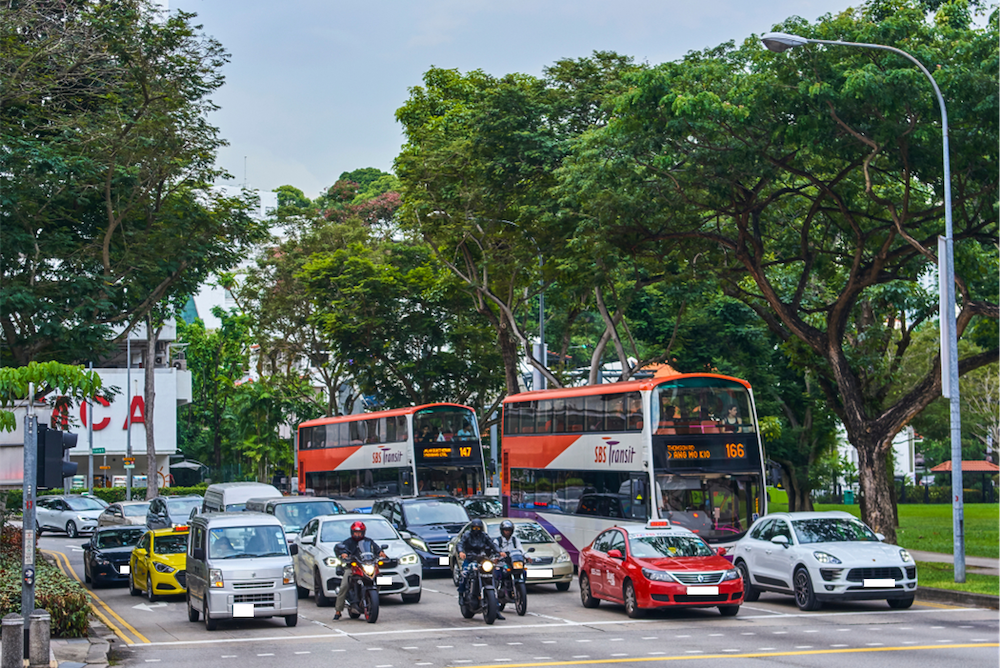
Singapore’s roads had their deadliest year in a decade in 2025. According to the Singapore Police Force’s annual road traffic situation report, 149 people died in traffic accidents last year, up from 142 in 2024. Another 9,955 people were injured, a 6.6% increase over the year before. The same report identified failure to keep a proper lookout as the leading cause of accidents, at 52% of cases, followed by failure to have adequate control of the vehicle (11%) and changing lanes without due care (7%).
The response came on 31 July 2026, when the Traffic Police announced sweeping revisions to the Driver Improvement Points System (DIPS), the demerit points regime that applies to every Singapore driving licence holder. The changes take effect on 1 January 2027. Once they do, it will be easier to lose your licence and harder to get it back.
A lower Bar For Suspension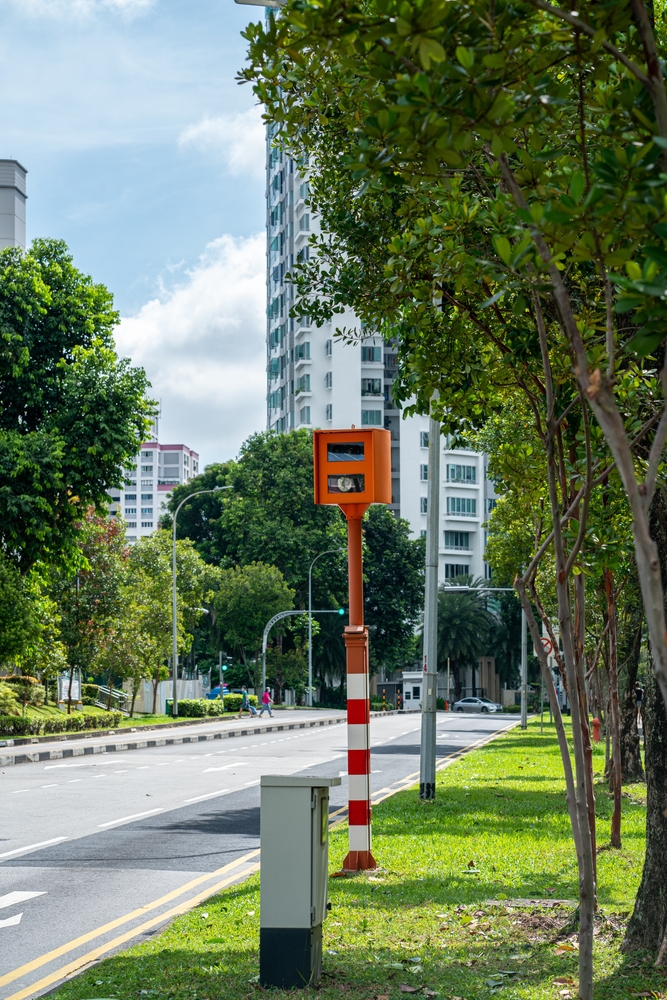
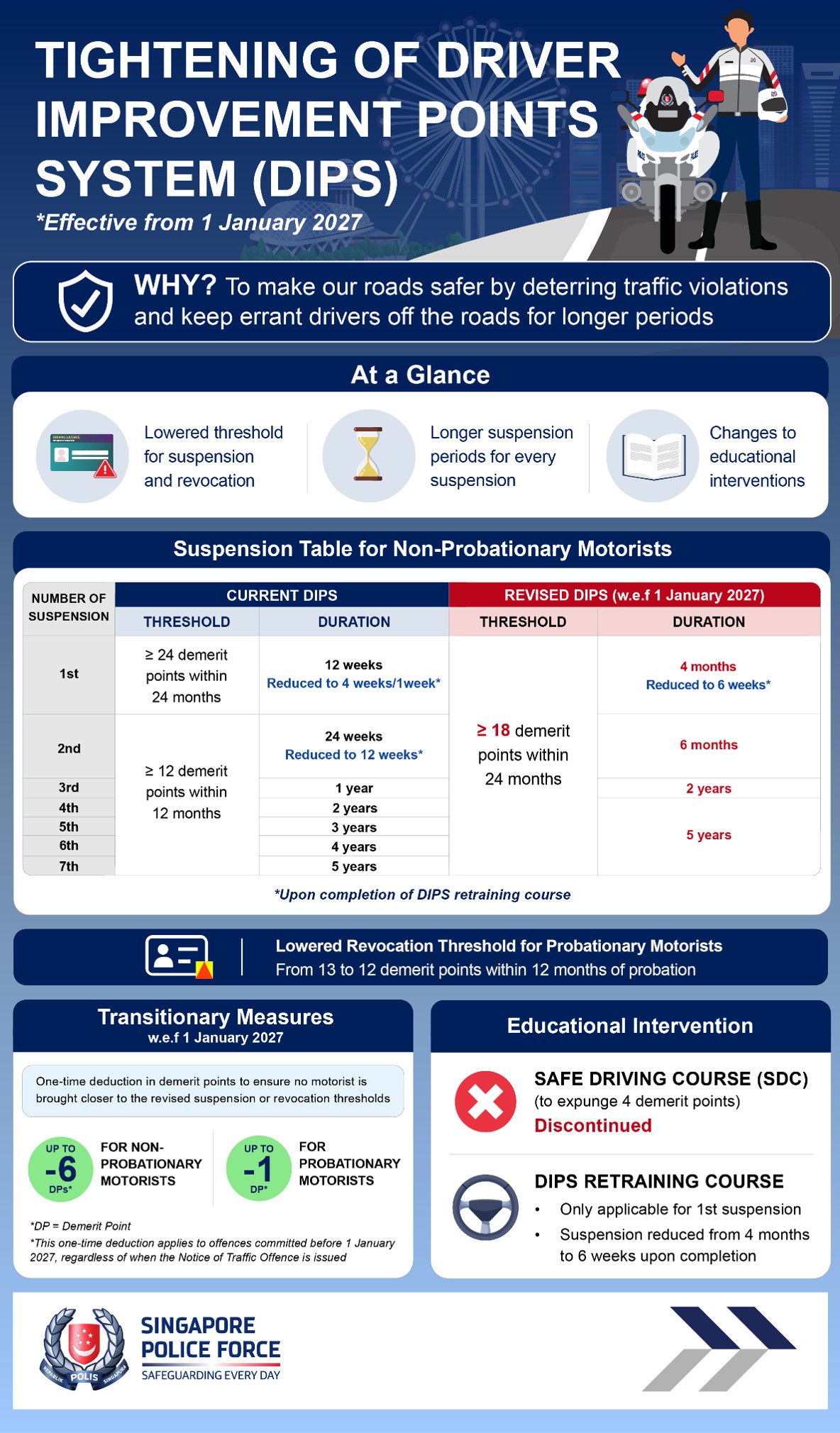
The headline change is the suspension threshold. Today, a non-probationary motorist can accumulate up to 24 demerit points within 24 months before facing the first suspension. From 1 January 2027, that ceiling drops to 18 points.
Six points may not sound like much, but consider how quickly they can add up. Running a red light carries 12 demerit points. Under the new regime, a motorist who beats a red light while also speeding, which now attracts a minimum of six demerit points, will hit the 18-point ceiling in a single journey, and be suspended immediately. What used to take a string of offences can now happen in one bad decision.
The most serious offences are being recalibrated to match. This is not a lighter penalty. Violations that currently carry the maximum 24 demerit points, including exceeding the speed limit by more than 50 km/h and reckless or dangerous driving, will carry 18 points to match the new lower ceiling, so a single such offence will still mean immediate suspension.
Longer Time Off The Road
Suspensions themselves are getting longer at every tier. The first suspension will last four months, up from the current 12 weeks. A second will stretch from 24 weeks to six months, and a third from one year to two. From the fourth suspension onwards, the period is standardised at five years, replacing the current ladder that climbs from two years for a fourth suspension to five years for a seventh.
The stakes rise sharply once a suspension reaches the one-year mark. Any suspension of a year or more means the licence is revoked altogether, and the motorist must retake the driving tests. Under the new durations, that applies from the third suspension onwards.
One Course, One Chance
The DIPS Retraining Course, a one-and-a-half-day rehabilitative programme, has long offered suspended motorists a way to shorten their time off the road. At present it’s available for the first two suspensions, letting first-timers cut a 12-week suspension to four weeks, and second timers halve theirs to 12 weeks.Motorists suspended a third time or more already have no such route, and serve the full term.
From 1 January 2027, the course will be offered only to motorists serving their first suspension, who can have the new four-month period reduced to six weeks upon successful completion. For second and subsequent suspensions, there will be no course and no reduction. The system will extend only one chance at rehabilitation, not several.
The Safe Driving Course is being retired entirely. The four-and-a-half-hour programme allowed motorists who had accumulated points but not yet faced suspension to expunge four points. Take-up was low, at 15% of those offered it between 2023 and 2025, and its effect on reoffending was found to be marginal. Offer letters ceased from 1 August 2026, and anyone holding one must complete the course by 31 December 2026.
Tighter margins for new drivers
New licence holders serve a one-year probation, during which their licence will be revoked should they accumulate too many demerit points. That threshold falls from 13 points to 12 under the revised system. The police say starting stricter is intended to shape responsible driving behaviour at an early stage, when habits are still being formed.
The single point makes a real difference. Running a red light and using a handheld mobile phone while driving each carry 12 demerit points. From 2027, either offence on its own will cost a probationary driver their licence immediately. The police say the change is intended to shape responsible driving habits at the earliest stage, when they matter most.
A clean Slate Before The Switch
To smoothen the transition, the Traffic Police will make a one-off adjustment to every motorist’s demerit points as at 31 December 2026. Non-probationary motorists will have up to six points deducted from their balance, mirroring the six-point drop in the suspension threshold.
Probationary motorists will have one point deducted, matching the change to their revocation threshold. A non-probationary motorist carrying four points on 31 December 2026, for example, will start the new year with none. Any unused portion of the deduction can offset only offences committed before 2027, and cannot be banked against future violations.
Second Minister for Home Affairs, Sim Ann, said the adjustment was introduced after vocational drivers and transport union leaders raised concerns about their livelihoods, and ensures that no motorist is suspended or loses a licence solely because of the new rules.
What Stays The Same
Fines for traffic offences remain unchanged, and so do the rewards for driving well. Motorists who stay offence-free for 12 months from their last violation will still have their demerit points wiped from the record, and those who remain offence-free for 24 months after a suspension ends will have past suspensions cleared too. Motorists with no demerit points for at least three consecutive years remain eligible for a Certificate of Merit, which may earn a discount on motor insurance renewal, at the insurer’s discretion. The carrots are staying; it’s the sticks that are getting heavier.
Time For A Reset
Announcing the changes, the minister was direct about the reasoning. “With road fatalities reaching a 10-year high, it’s clear that we must do more to improve road safety,” she said, urging motorists to reset their driving habits and mindset ahead of 2027.
That advice is worth taking literally. Check your current balance through the Traffic Police’s online demerit points enquiry service, and treat the months before January 2027 as a rehearsal for the tighter regime. But the surest way to stay on the right side of the new thresholds has not changed at all: obey the speed limits, stay focused, put your phone away and slow down at junctions. If you drive defensively, and make the right choices, the arithmetic will never come into play.