

Singapore’s 36km Coast-to-Coast Trail was not designed with young children in mind. But done in sections, it is one of the best ways to show kids what this city-state is really made of, away from the malls and the screens.
What Is the Coast-to-Coast Trail?
The Coast-to-Coast (C2C) Trail is a 36km route that spans Singapore from Jurong Lake Gardens in the west to Coney Island Park in the northeast, linking nature areas, parks, and park connectors along the way. It was launched by the National Parks Board on 30 March 2019 and the full trail is divided into ten checkpoints. While seasoned walkers sometimes attempt all of it in a single day, most families will find it more practical to pick a section and work through the trail over several outings.
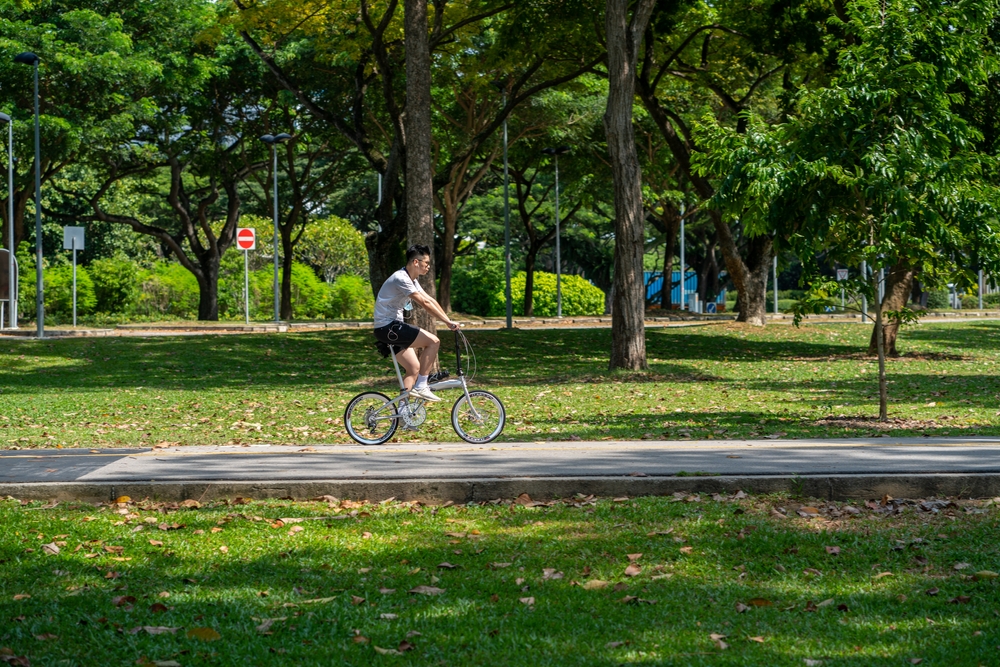
The good news is that the trail is not all dense jungle. Large stretches run along park connectors, meaning there are paved and shaded paths with toilets and rest areas nearby. For families, this makes the C2C far more manageable than it sounds.
Plan in Sections, Not All at Once
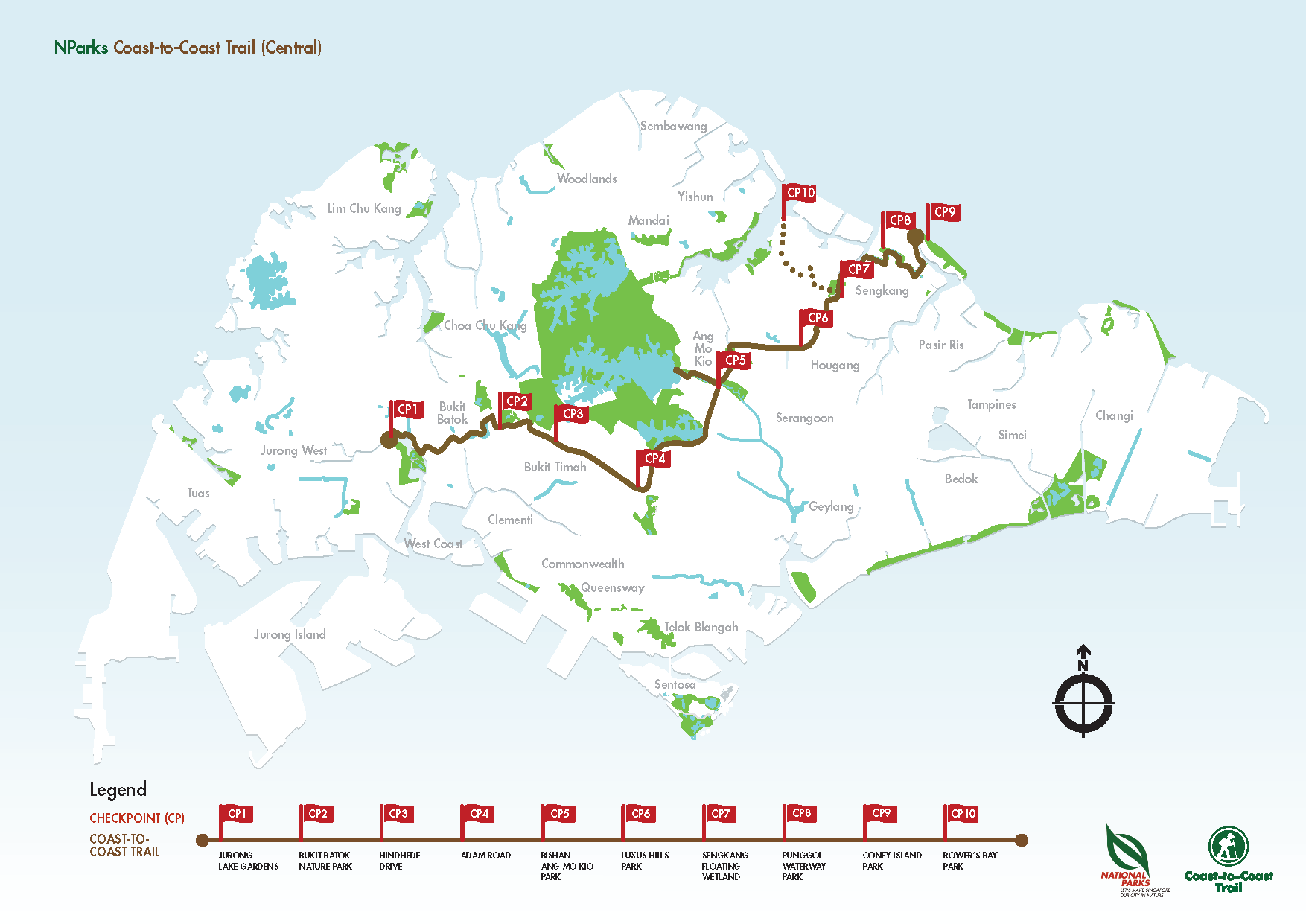
Nobody should attempt 36km with a seven-year-old in tow. The trail’s checkpoint system makes it easy to break into bite-sized segments. A good approach for families is to pick two or three checkpoints per outing, use public transport to get to the start point, and take a taxi or private-hire car home from the end.
The general distances between checkpoints give a rough sense of effort: from the starting point at Lakeside to Hindhede (Checkpoint 3) is about 8km, from Hindhede to Adam Food Centre is about 6km, and from Adam to Bishan is another 8km. For families with younger children, aim for the shorter sections and build up from there. The northeastern end of the trail, from Punggol Waterway Park to Coney Island, is particularly suited to families because the terrain is flat and the surroundings are engaging.
Starting West: Jurong Lake Gardens
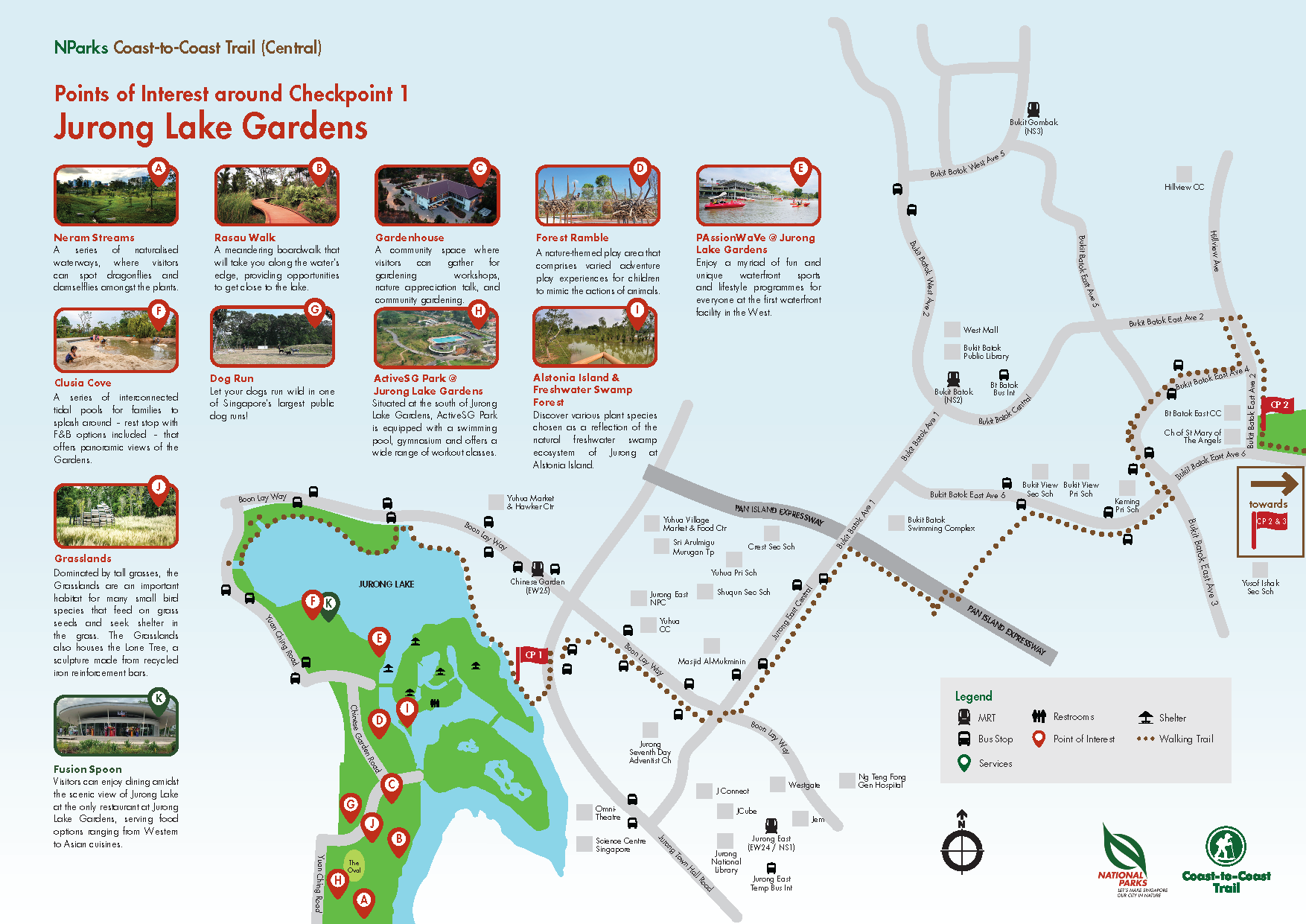
Image Credit: NParks
The trail begins at Jurong Lake Gardens, which spans 90 hectares and includes Lakeside Garden, the Chinese and Japanese Gardens, and Garden Promenade. The grounds are landscaped for families and communities to play, learn, and bond. It is a solid place to start a half-day outing with children. The gardens are wide and open, there is plenty of shade near the water, and young kids can run around without much worry. The Lakeside MRT station puts this section within easy reach of most parts of the island.
Bukit Batok Nature Park
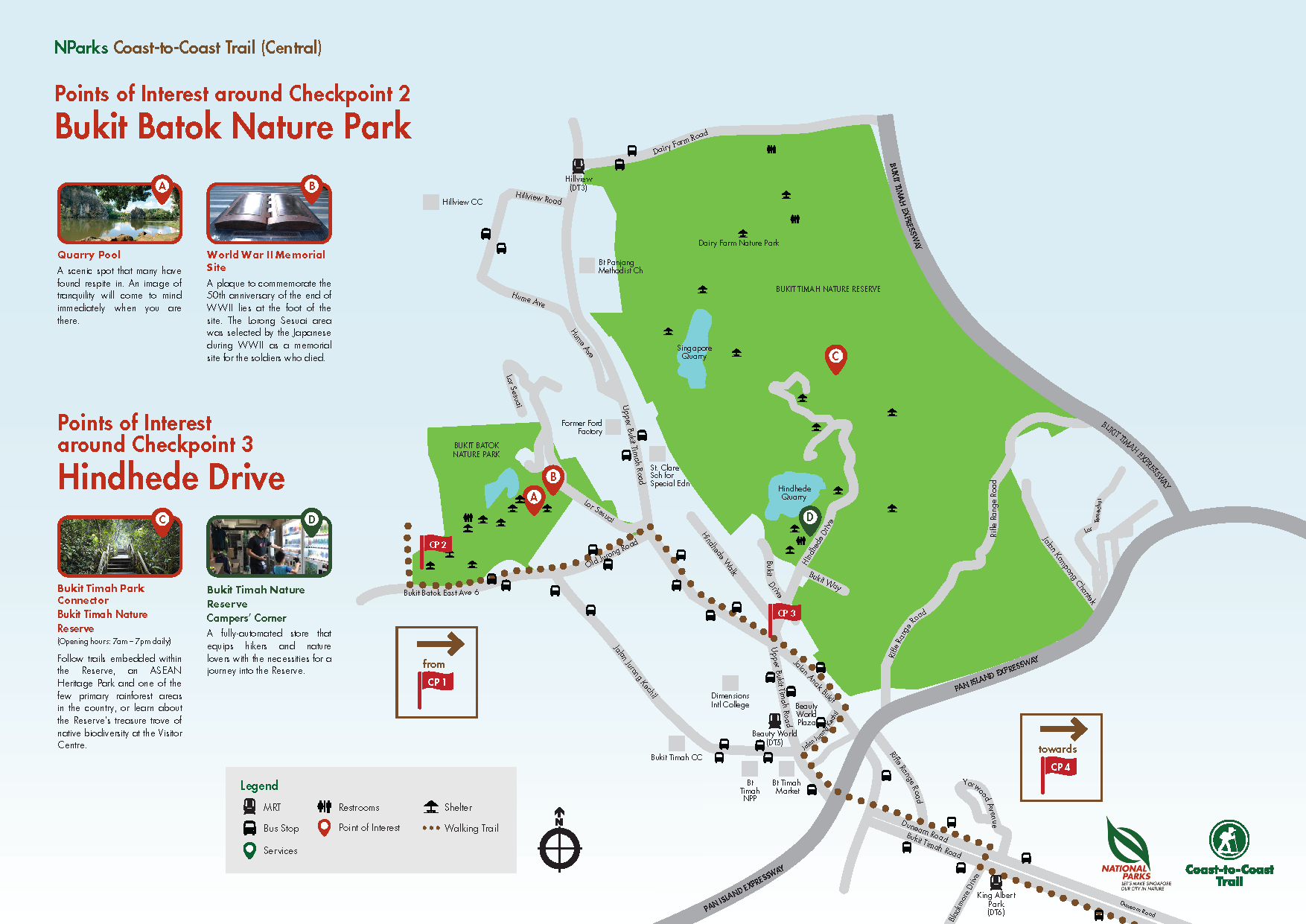
From here, the trail moves east through Bukit Batok Nature Park and towards Bukit Timah Nature Reserve. This stretch has more elevation and rougher terrain, and it is where the trail starts to feel like a proper nature walk. Bukit Timah Nature Reserve is known for having one of the richest ecosystems in the world, with more tree species than the whole of North America, and it is home to long-tailed macaques, squirrels, and snakes. For older children who are comfortable on uneven ground, this is where the trail becomes genuinely exciting. For toddlers and pram pushers, it is best skipped.
The Middle Section: MacRitchie to Bishan
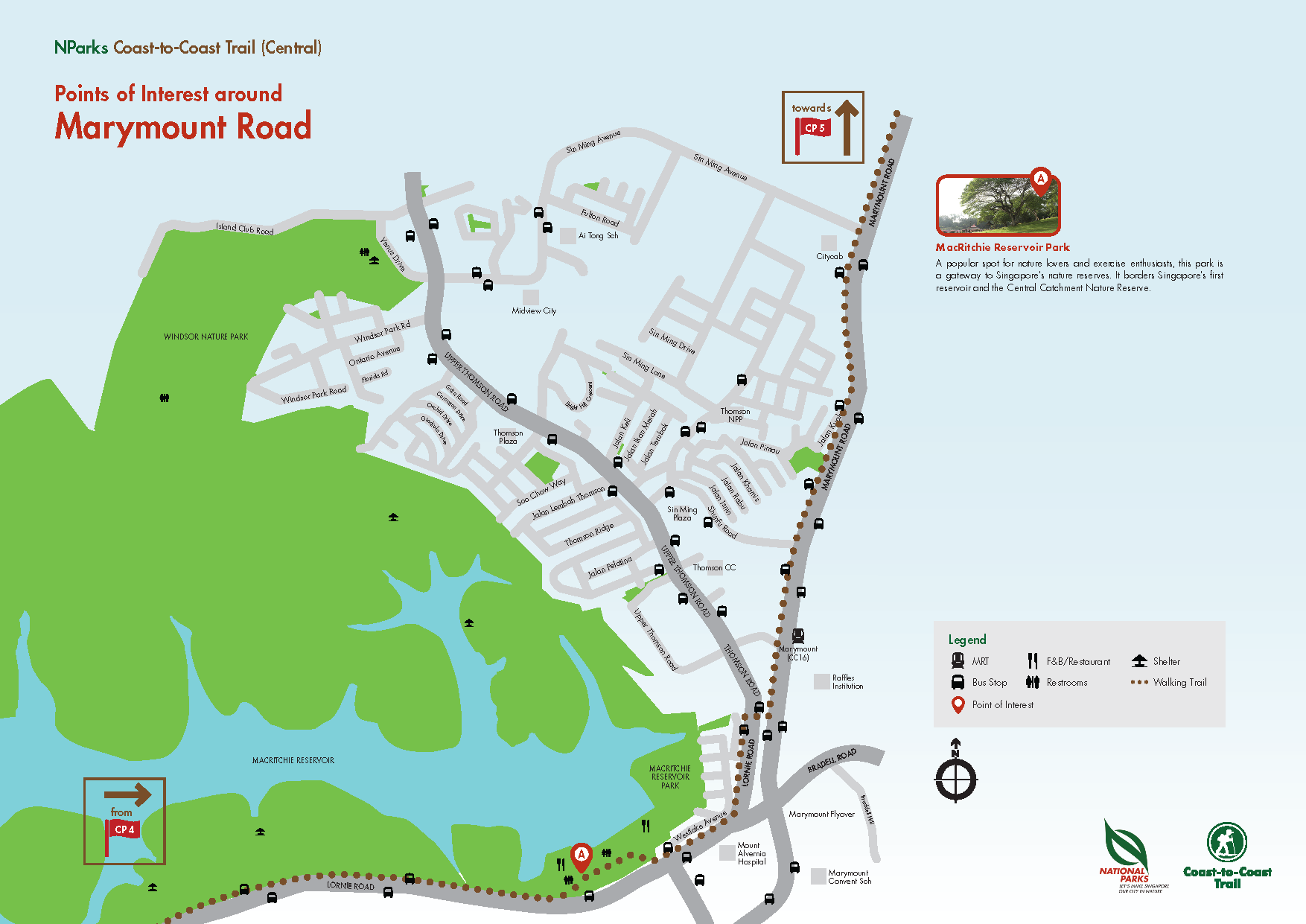
Image Credit: NParks
The central stretch of the trail passes through some of Singapore’s most beloved green spaces. MacRitchie Reservoir Park offers boardwalks over the water and the chance to spot monkeys and monitor lizards at close range. Children tend to find this part of the walk entertaining precisely because the wildlife shows up without much effort.
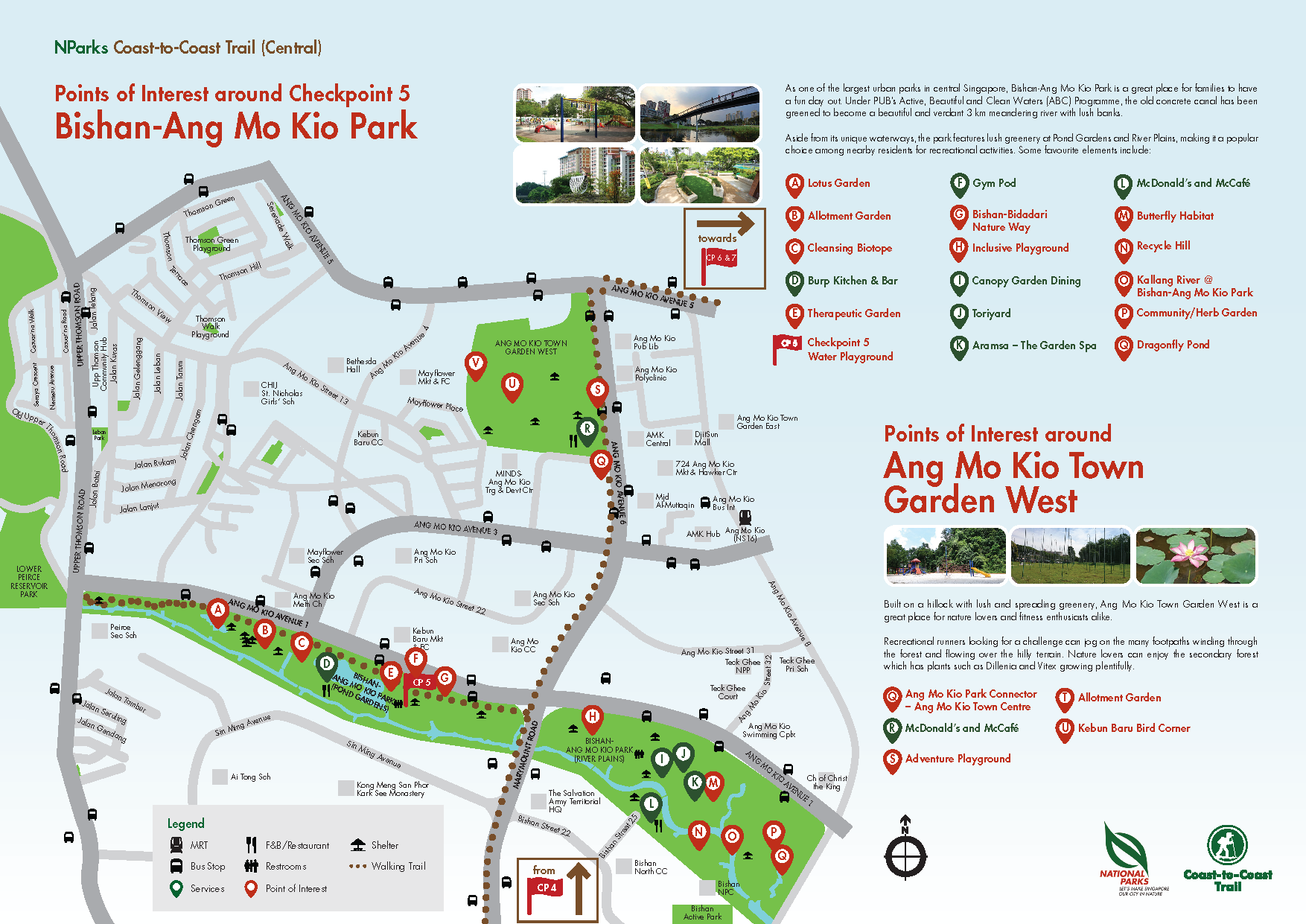
Bishan-Ang Mo Kio Park, one of Singapore’s largest parks, has the Kallang River running through it and comes with a good mix of amenities, including eateries such as Palm Garden and McDonald’s , a playground, and a water park (open Thursdays to Sundays and public holidays, 8am to 11am and 4pm to 8pm). This checkpoint makes a natural halfway point for families doing the central section. The water play area is especially useful on a hot day, as children can cool off while parents rest nearby. Food options at Bishan include hawker fare at Teck Ghee Court Market and Food Centre across the road, which tends to be quieter and cheaper than the options inside the park itself.
The Northeast Run: Punggol and Coney Island
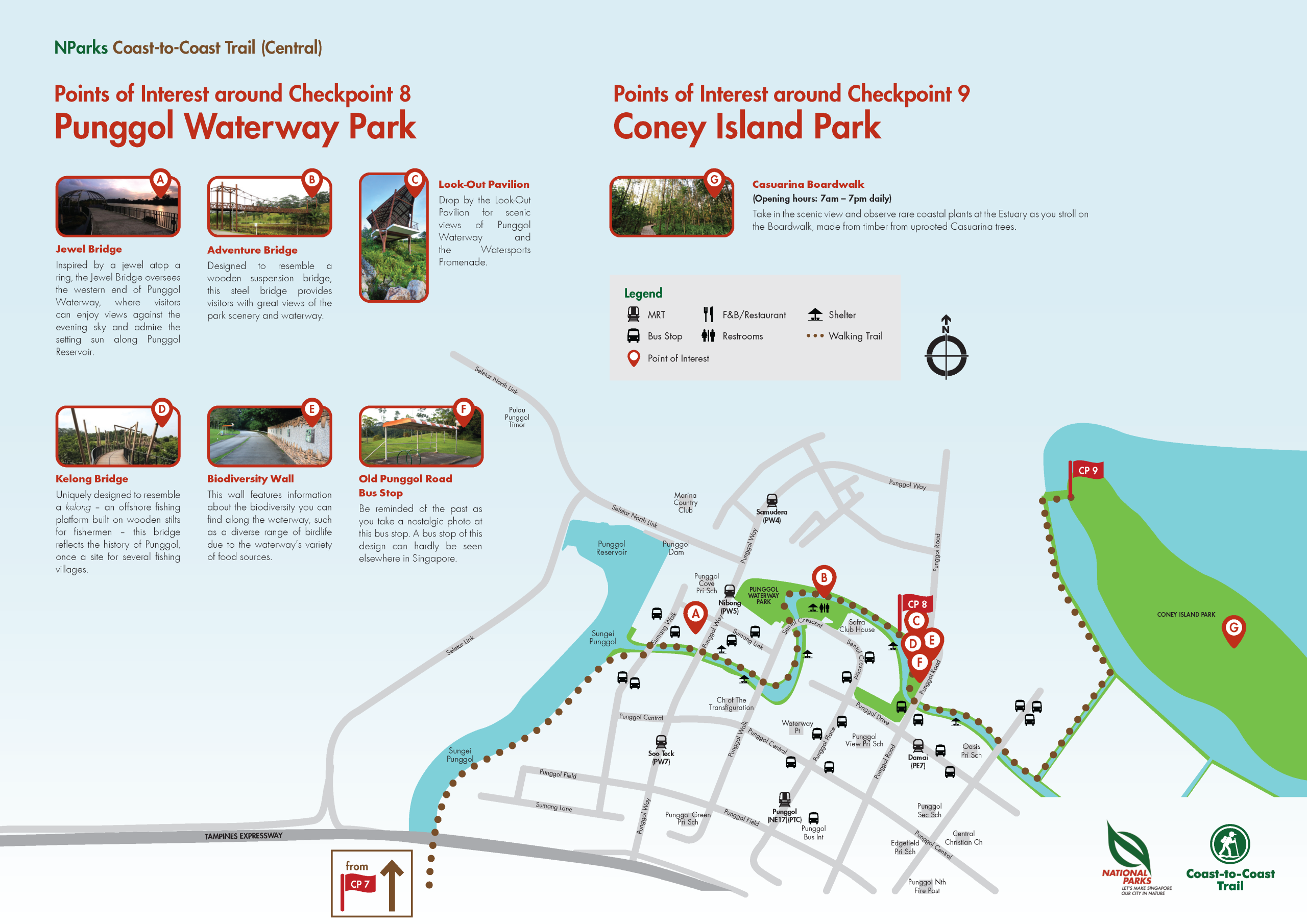
Image Credit: NParks
The northeastern section of the trail is arguably the most family-friendly stretch. Punggol Waterway Park, Checkpoint 8 on the C2C Trail, is divided into four themed zones: Nature Cove, Recreation Zone, Heritage Zone, and Green Gallery. The sand play area here draws younger children because it offers a large open sandpit where kids can dig, build, and do sensory play. Bring sand toys if you have them. The area is popular with younger children, and the park has good toilet facilities and shaded rest spots. From the park, the path along the Punggol Waterway is flat and easy to navigate, with the water visible for much of the walk.
The final checkpoint at Coney Island Park offers a mix of habitats, including coastal forests, grasslands, mangroves, and casuarina woodlands, and is home to a wide variety of fauna. The island has a quieter, more rustic feel compared to the manicured parks earlier on the trail.
Children who have been doing the trail in short sections and are used to more urban surroundings will find that Coney Island feels genuinely different. There are no hawker stalls inside the island itself, so bring water and snacks. After the walk, Punggol Settlement nearby has food options and a waterfront setting that makes for a decent end to a day out.
Food Breaks Worth Planning Around
One truth about doing the C2C Trail with children: food stops are as important as the walking itself. Plan them. Along the route, there are MRT stations, coffee shops, and 7-Elevens near most checkpoint areas. Bukit Timah Market and Food Centre near Checkpoint 3 is a practical pit stop for the western section, with solid hawker options and lower queues than Adam Road Food Centre further along. For the northeastern section, Oasis Terraces near Punggol has a good spread of food and beverage options.
Avoid the mistake of relying on food you find along the way once you are inside nature reserves or on more remote sections of the trail. Pack snacks, bring more water than you think you need, and factor rest time into the plan. Singapore’s heat and humidity are consistent, and children tire faster in it than adults do.
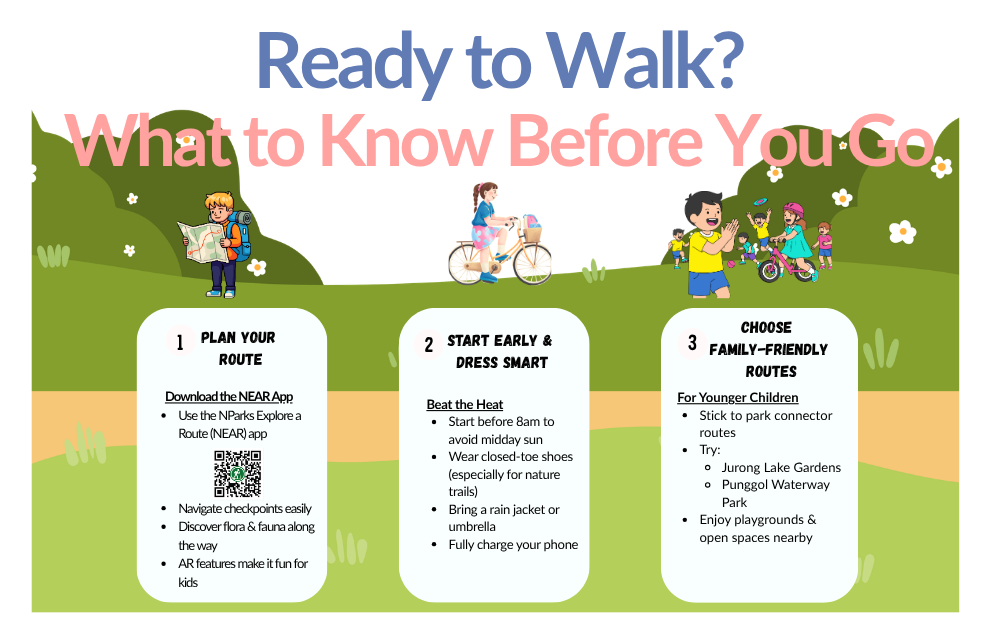
A Different Way to See Singapore
The full C2C Trail will not suit everyone. The heat is real, the distances are long if done all at once, and parts of the route are genuinely challenging. But done in sections over several weekends, it becomes a different kind of family project. Children who have walked from Jurong to Coney Island in stages come away with a sense of what Singapore actually looks like beyond the main tourist areas. That is worth more than any guided tour.
The trail shows a city that has held onto its green spaces deliberately, connecting them for people to move through. For families looking for something that is both outdoors and genuinely purposeful, the Coast-to-Coast Trail is a practical and rewarding way to spend a Saturday morning, again and again, until you finally reach the other side.