

Don’t allow your home to become a sick building and bring you down as well. Filling the space with light and allowing air to freely flow through it could be just what the doctor ordered.

Whether you live alone, with family members or with roommates, have you ever wondered whether the state of your home affects your well-being? Beyond just following feng shui principles, does keeping your home neat, clean, bright and airy have real benefits? According to scientists, the answer is “yes”.
Take, for example, clutter. “Clutter is an overabundance of possessions that collectively creates chaotic and disorderly living spaces,” says Joseph Ferrari, a professor of psychology at DePaul University. Messy and cluttered spaces can cause anxiety, poor-quality sleep, and loss of focus. The amount of sunlight one gets at home is also important. A Cornell University study shows that people with access to sunlight experienced an 84% drop in health issues such as eyestrain and headaches. Moderate sun exposure boosts your mood, as well as serotonin and vitamin D levels.
Focusing on lighting and ventilation, here are some ideas for you to adopt in your home for better mental and physical health.
Lighting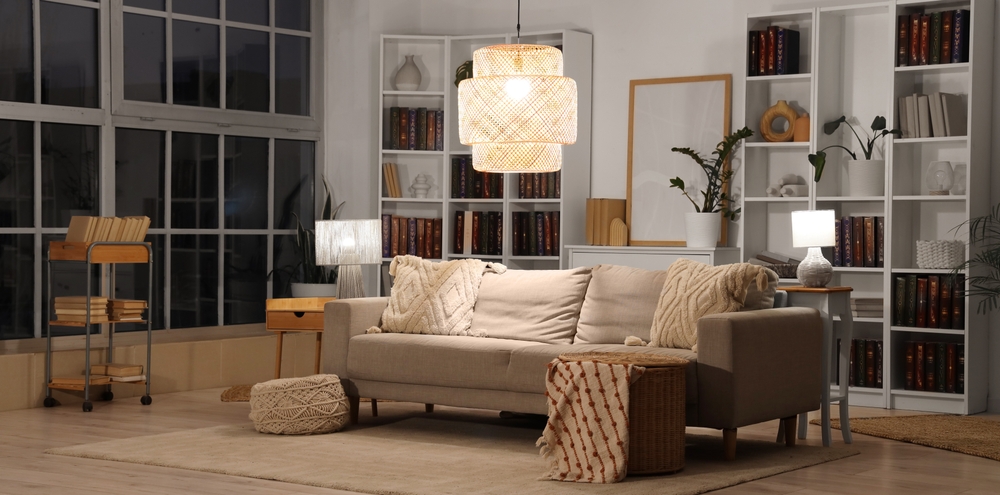
Natural light is one of the most potent mood enhancers there is. It’s no wonder many people living through winter months, which have much less daylight, are affected by Seasonal Affective Disorder (SAD). Allow natural light into your home as much as possible to create an uplifting mood. If you need privacy, use sheer material for curtains.
You’ll also need lamps that provide all three types of lighting — ambient, accent and task — to illuminate your space without casting harsh shadows, whatever you’re doing. It’s also important to consider the ‘temperature’ of the lighting. Cool (cool white, daylight, or blue hue) lighting improves productivity and alertness — good for the study or home office. Warm (warm white, soft white, or yellow hue) lighting gives a sense of calm and relaxation — good for spaces like the living room or bedroom. Another tip is to have a dimmer dial and compatible bulbs (eg Philips Hue, Tapo) for some of your lamps so that you can control the intensity of the light to match your needs and moods.
Finally, switch to LED lights instead of installing old-fashioned incandescent bulbs. Not only will you be saving the environment, you’ll also be saving a pretty penny due to LED’s energy efficiency. This piece of advice may not seem to be linked to your health, but knowing that you’re contributing to the sustainability movement could give a boost to your mental health! Do also note that the relationship between colour temperature and health is complex, and varies from person to person.
Ventilation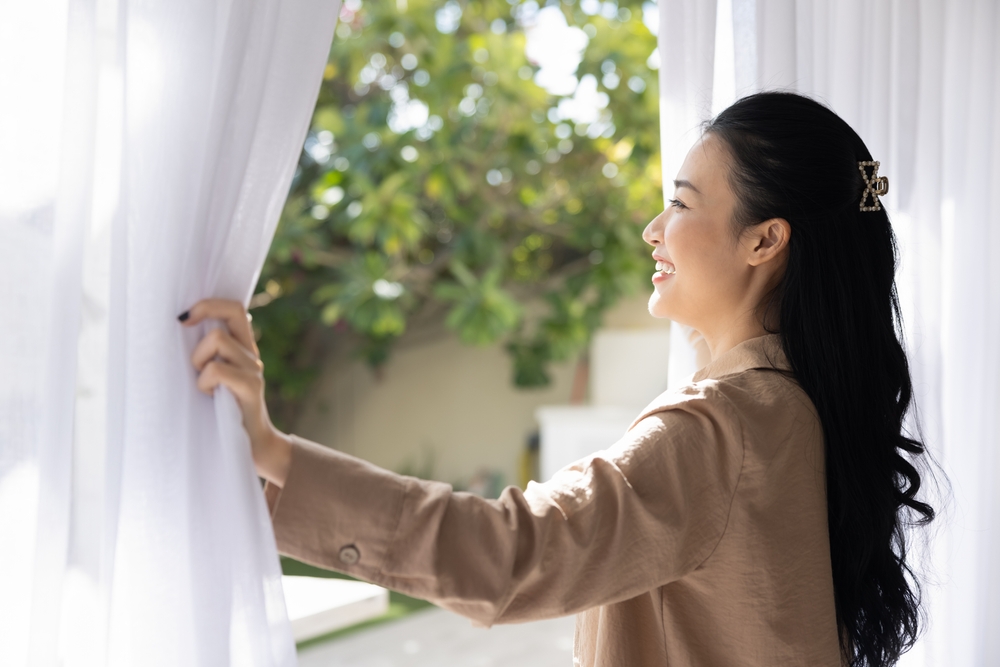
Ventilation improves air quality by preventing the build-up of airborne disease vectors as well as particulate and gaseous pollutants, all of which can lead to ill health. Ventilation helps to remove all sorts of odours (eg pets, cooking) and keep your home fresh and cool — all these reduce irritation and make you comfortable, thus enhancing your mental health. Ventilation lowers humidity — important in Singapore’s tropical climate — helping to prevent the growth of mould and mildew, which are not only health hazards, but could destroy your home and furniture.
If you’re going for natural ventilation, the obvious thing is to leave your doors and windows open. Of course, ensure first that the outdoor air quality is good. Adopt cross ventilation, where both the front and back doors/windows are open so that air can flow through your home easily. Keep your home tidy, as clutter tends to obstruct airflow. Should you still insist on installing gadgets such as fans and air-cons, you can reduce your need to switch them on if you practice cross ventilation.
If the outdoor air quality is bad, such as during haze season, shut all doors and windows, then turn on an air purifier. It draws in dirty air and pushes clean air out, but its cooling effect is limited, so you may wish to turn on the fan or air-con as well. Alternatively, there are air purifiers with a fan function available in the market.
Go Green
One final tip regarding air quality at home: grow some pots of indoor plants. Species such as peace lily, snake plant, and spider plant[3] not only add a touch of nature into your home, but they can also remove gaseous pollutants such as formaldehyde and benzene. Numerous studies have shown that indoor plants significantly improve mental and physical health. According to one study, “Our results suggest that active interaction with indoor plants can reduce physiological and psychological stress compared with mental work. This is accomplished through suppression of sympathetic nervous system activity and diastolic blood pressure and promotion of comfortable, soothed, and natural feelings.”
As the saying goes, a man’s home is his castle — but it doesn’t have to be dark and damp! Keeping it light and airy will not only make your humble abode cosy and comfortable, but also give a boost to your well-being.